Whenever I walk through a garden or backyard, I always notice how much a walkway can change the whole feeling of the space. There’s something magical about stepping onto a path that guides you through flowers, trees, or even a cozy patio corner. Building a new walkway doesn’t have to cost a fortune or require lots of fancy tools—just some creativity, a little time, and inspiration from other DIYers like you and me.
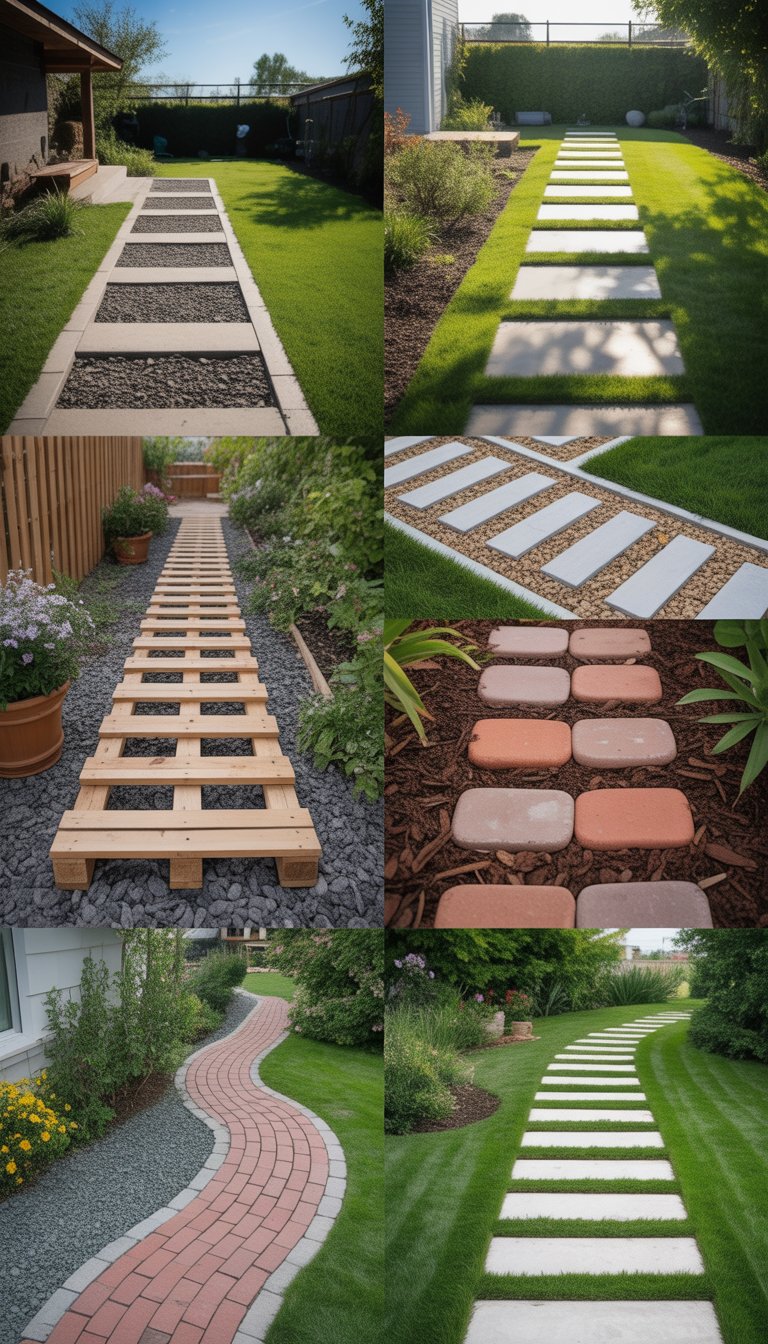
I’ve gathered these 15 cheap walkway ideas DIY because I believe anyone can turn their outdoor space into a welcoming, stylish retreat without breaking the bank. With just a few materials and some simple steps, we can add beauty, personality, and function to our yards. Each idea can help you create a space you’ll be proud to show off, proving that great design is really about imagination and heart, not just money.
Gravel Path with Landscape Fabric
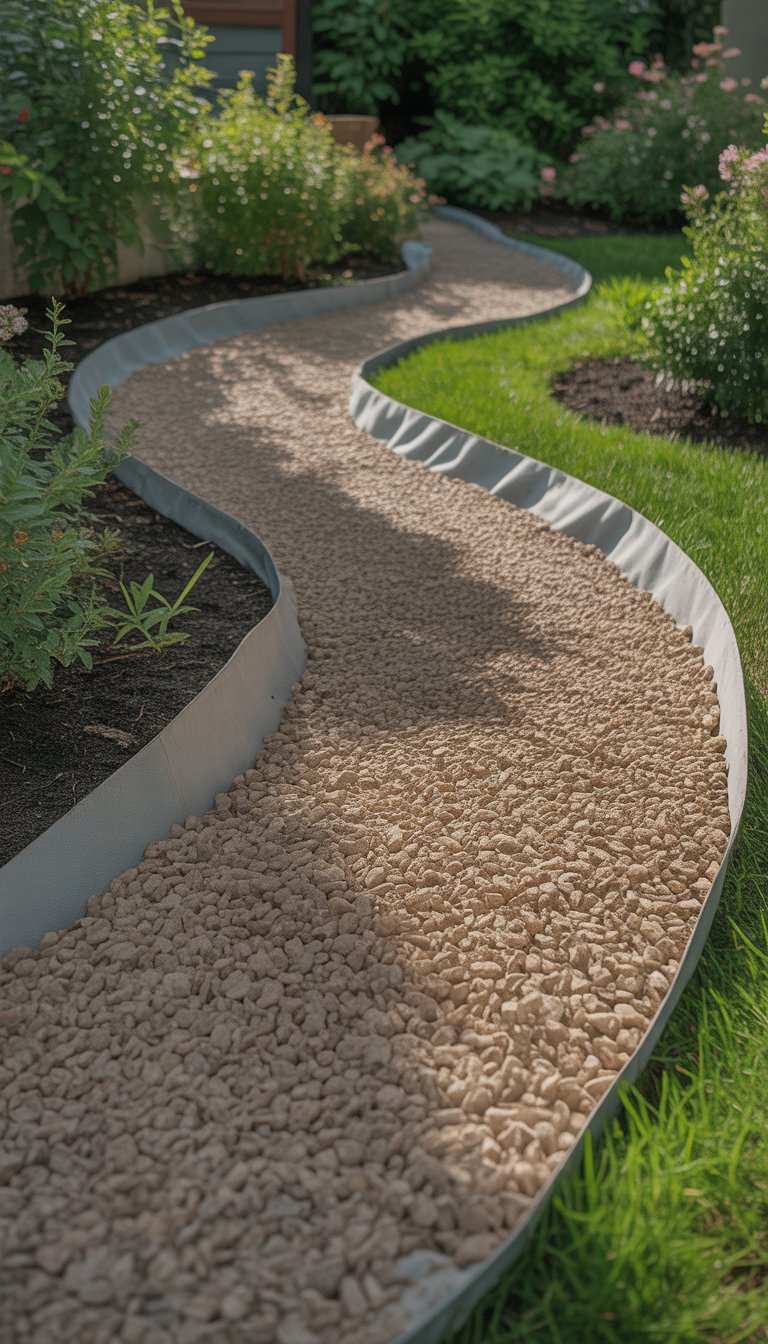
I love using gravel paths because they are easy on my budget and look great in any yard. To make things last, I always lay down landscape fabric first. This helps stop weeds and keeps the gravel from mixing with the dirt over time.
I roll out the fabric along my chosen path and smooth it flat. Securing the edges with landscape staples is a must, so it stays put while I work.
After that, I pour gravel right on top of the fabric. I aim for a layer about two inches deep to make the path comfy to walk on. For more details on how I make these, I check guides like this simple step-by-step gravel path tutorial.
Mulch Walkway with Wood Edging
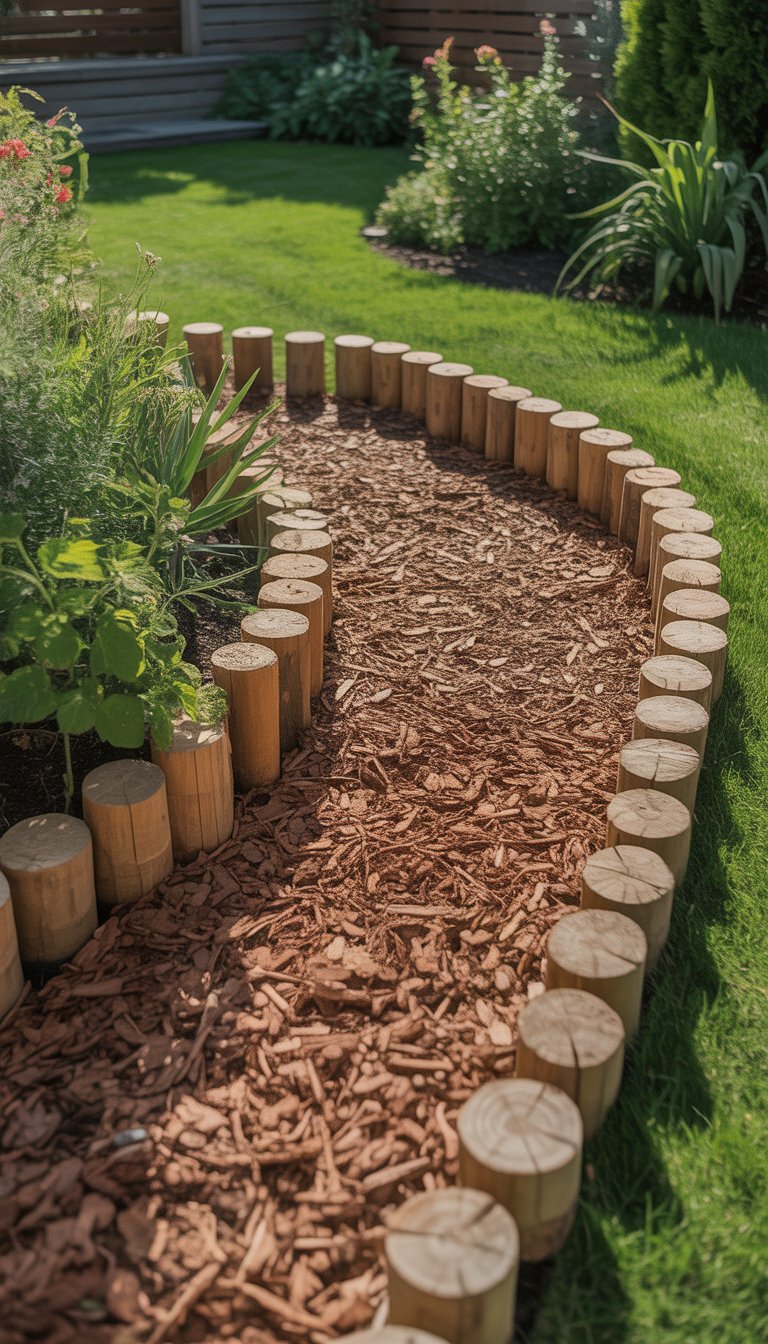
One of my go-to walkway ideas is using mulch with wood edging. It’s easy to set up and feels natural in any backyard. To start, I lay down a thick layer of wood chips or bark mulch to help block weeds and keep mud away.
For the edges, I like using simple wooden boards or even split logs. This keeps the mulch in place and gives the walkway a finished look. I think the warm color of the wood makes the path feel cozy and inviting.
If I want a cleaner edge, sometimes I pick bricks or stones, but wood always seems easiest for me. It’s affordable, quick to install, and resilient. You can find more simple mulch walkway tips if you want to try it yourself.
Brick Paver Path in Herringbone Pattern
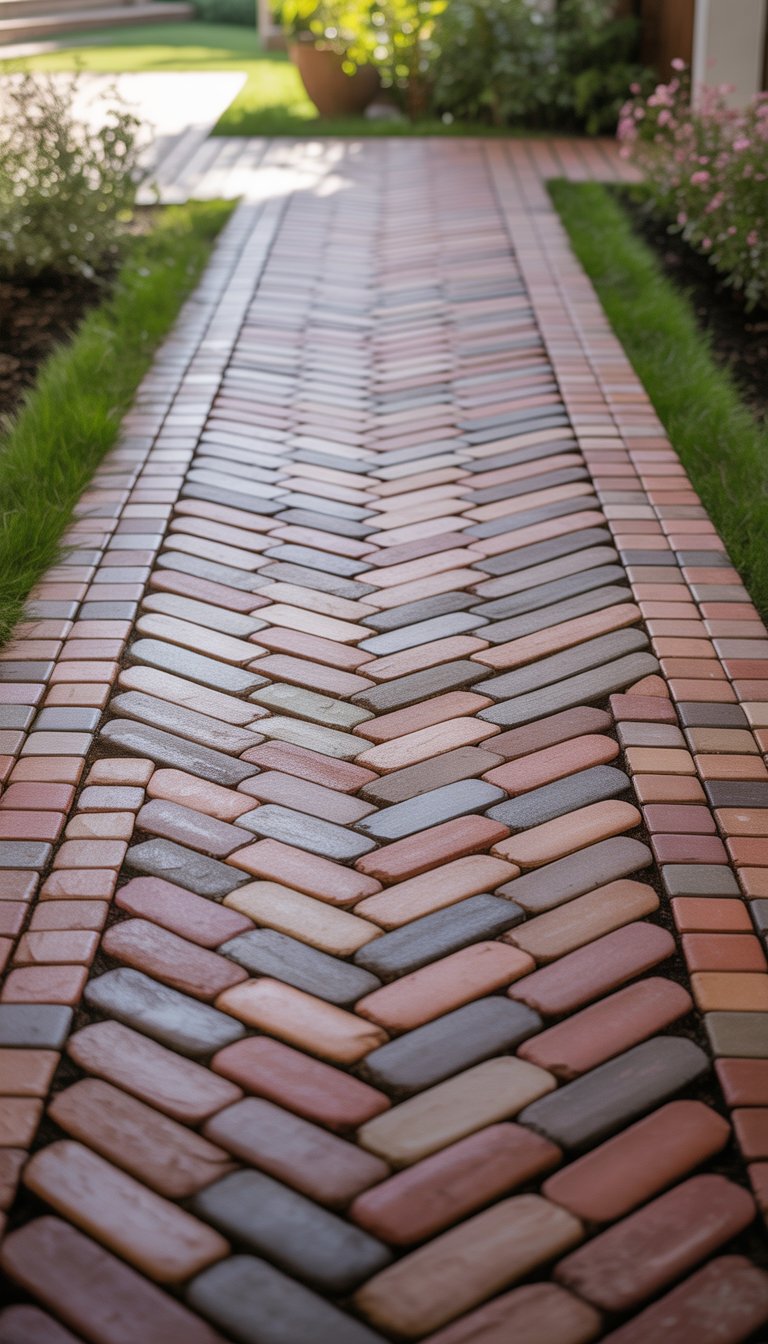
I love using brick pavers in a herringbone pattern for garden walkways. The design looks classic and never goes out of style. It adds instant character to any yard.
Laying out the herringbone pattern takes some time, but it’s worth the effort. I found it helps to start in the center of the path and work my way out. The pattern makes the bricks lock together, so the walkway feels sturdy under my feet.
If you want to save money, you can use reclaimed bricks. They bring a lot of charm and warmth to the path. For more inspiration, I like to browse through herringbone brick walkway ideas. It’s amazing how unique each path can look with simple materials.
Concrete Stepping Stones Inserted into Grass
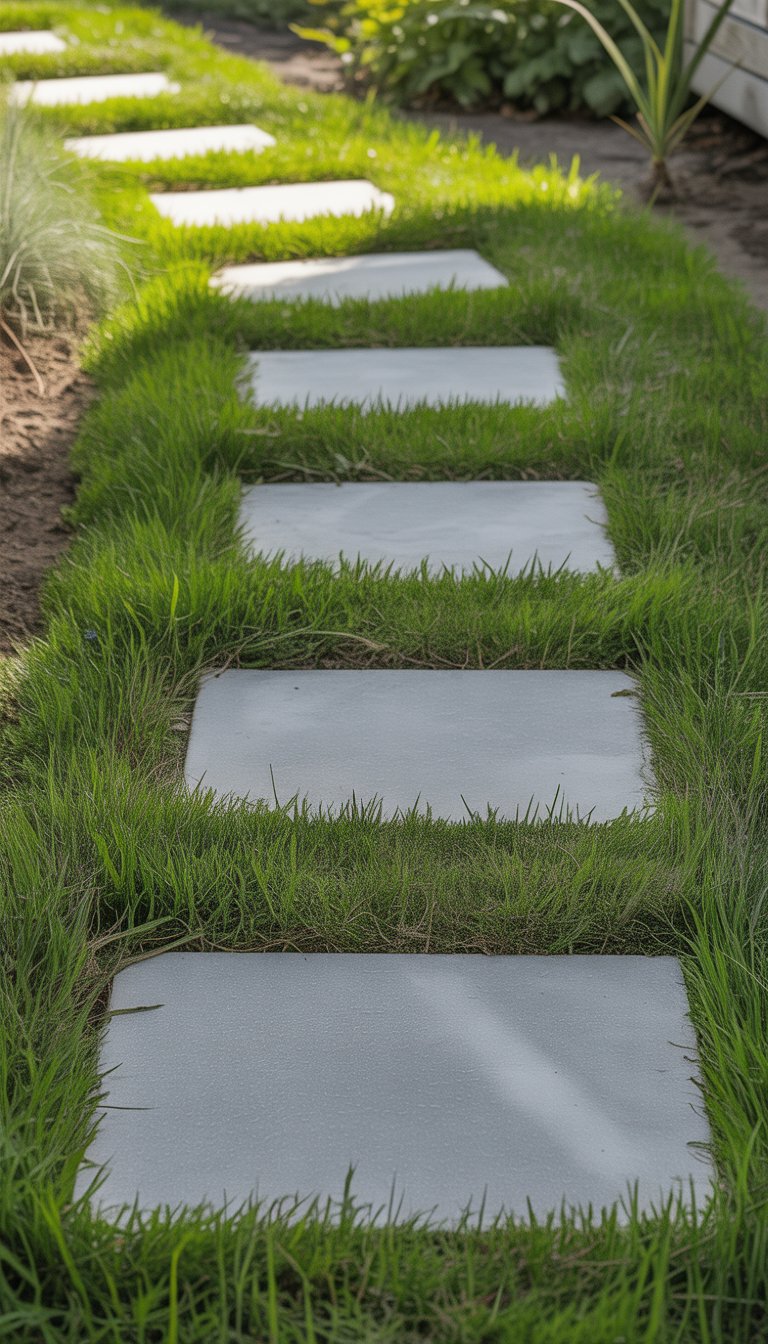
I love using concrete stepping stones for walkways because they are tough and look great with grass peeking through. Making my own stones lets me pick the shapes and sizes I want. It’s a fun project that doesn’t cost much, and I feel proud every time I walk on it.
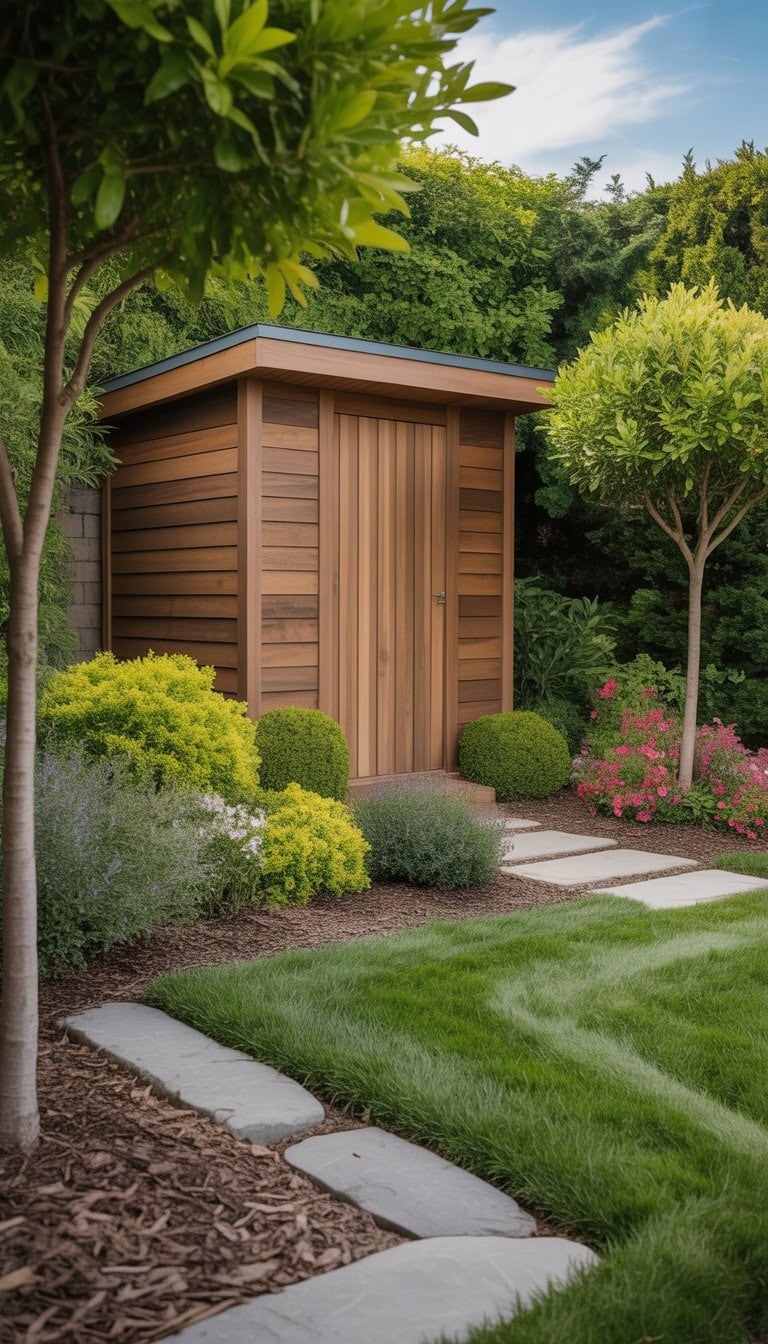
When I set each stone into my lawn, I space them just enough for a natural look. It’s important to dig each spot so the stone sits level with the grass. This makes mowing easy and keeps people from tripping.
I’ve found that concrete stepping stones in grass suit gardens of all styles. Sometimes I let clover or moss grow between the stones for a soft, green touch. It’s a simple way to add style without breaking the bank.
DIY Wooden Pallet Stepping Path
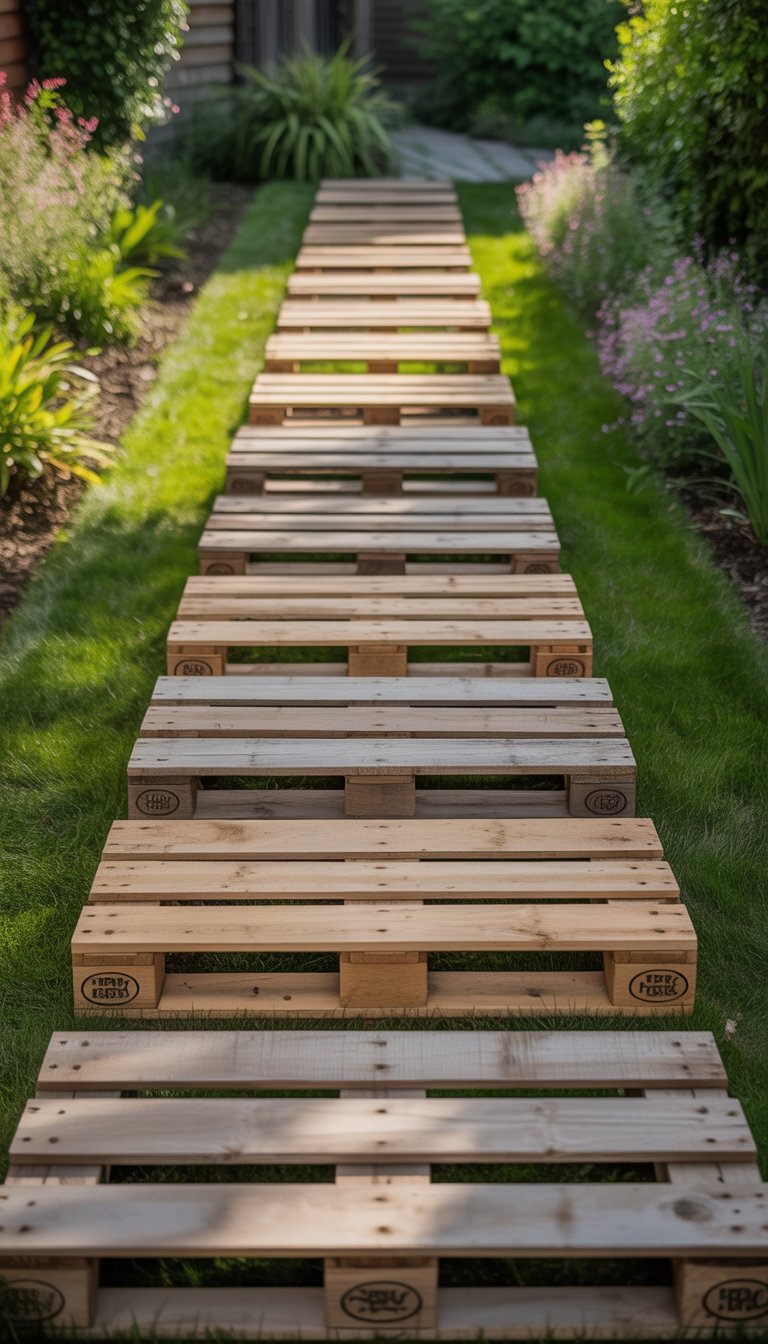
I love using old wooden pallets to make simple stepping paths for my yard. Pallets are easy to find, usually free, and great for repurposing.
First, I take apart the pallet and keep the best boards. I make sure to sand them a little, so they are safe to walk on. This step also helps smooth out any rough areas.
Next, I lay the boards out on the ground, spacing them to fit my step length. This makes the path feel comfortable underfoot and natural-looking in my garden.
If I want, I add small stones or mulch between the boards. This adds style and helps keep weeds away. The pallet walkway really gives my outdoor space a creative, cozy vibe, and it does not cost much. You can find some ideas and inspiration at this wood pallet walkway board.
Recycled Bottle Cap Mosaic Path
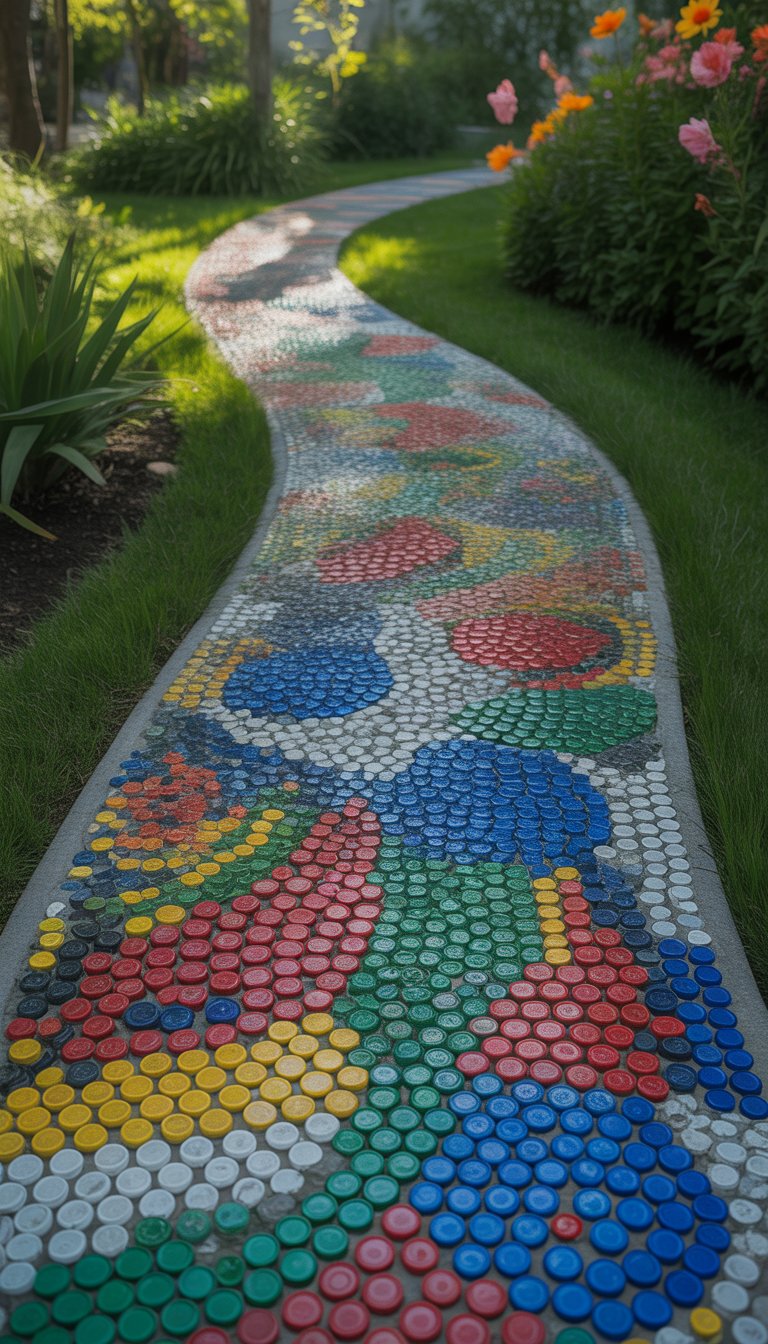
I love being creative with garden paths, so using recycled bottle caps is one of my favorite DIY ideas. Gathering them doesn’t take long if you ask friends and neighbors to save their caps for you.
Once I have enough, I lay out the design on the ground to see what looks best. I play with colors and patterns until I find something I like. Sometimes, I even add a background with stones or painted concrete to help the colors stand out.
To build the path, I press the bottle caps into wet concrete or a set base. Sealing the path helps protect it from rain and sun. This project is a fun way to reuse materials and make colorful art for the garden. For more inspiration, I check out bottle cap pathway ideas.
Pea Gravel with Border Stones
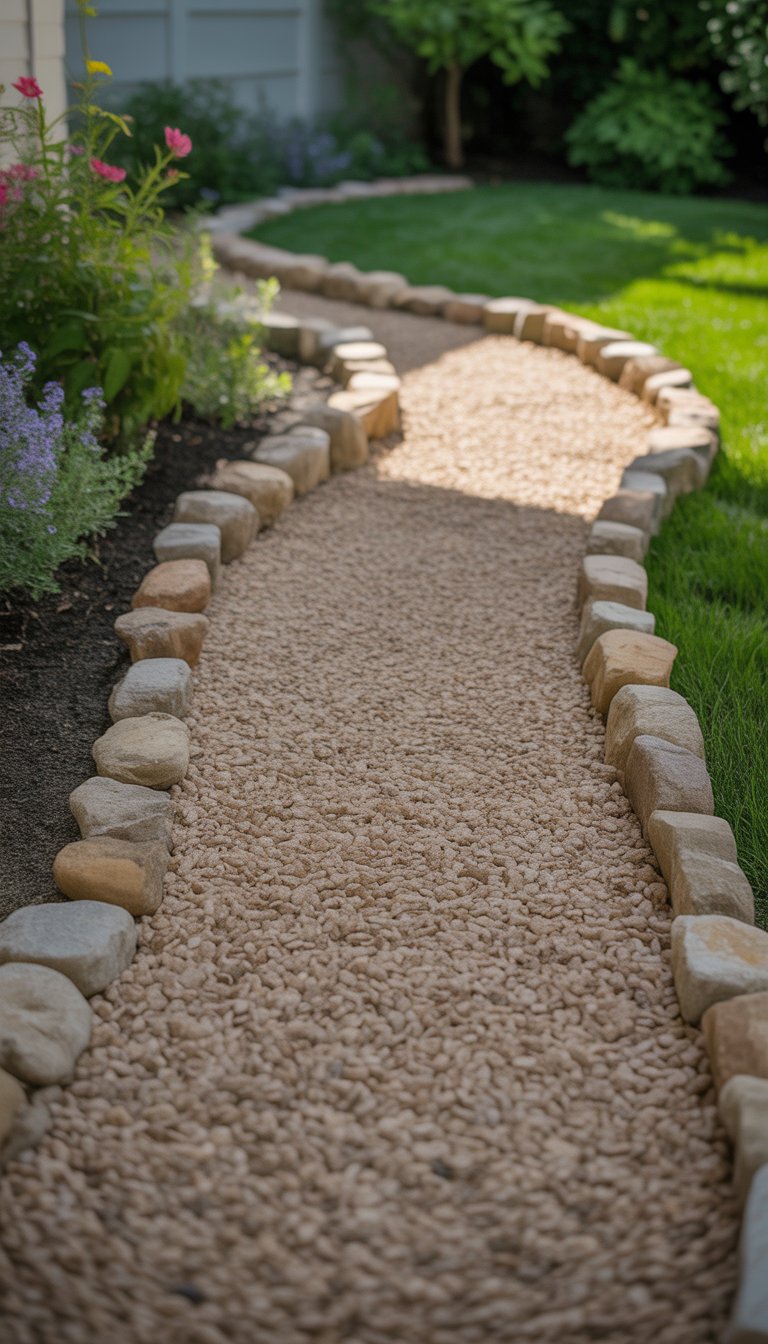
When I want a walkway that’s easy to install and still looks great, I go for pea gravel with border stones. I love how the soft, rounded stones feel under my feet.
I always start by laying down landscape fabric to stop weeds from growing through. Then I pour the pea gravel over it and smooth it out.
For the edges, I use larger border stones. These help keep the gravel from spilling into the garden and make the path look more finished.
Pea gravel is pretty budget-friendly, too. It usually costs about $1 to $3 per square foot, making it an affordable pick for most yards. It’s simple, but it makes a big difference in any walkway.
DIY Quikrete Walk Maker Stepping Stones
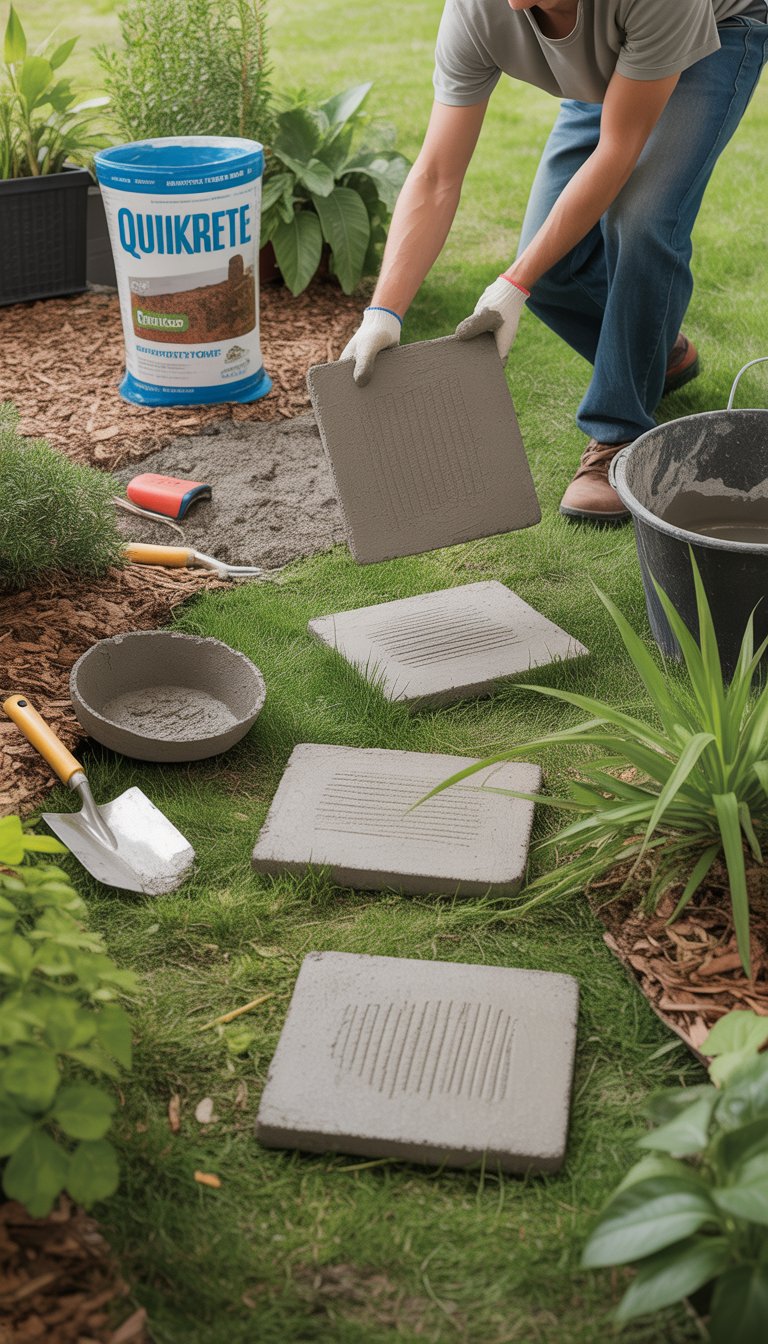
I love how easy it is to create unique stepping stones using the Quikrete Walk Maker. I just set the mold down, mix up some concrete, and pour it in. The molds help me get clean, natural-looking shapes without a lot of work.
Once the concrete sets, I lift the mold and see my new walkway take shape. To finish it off, I sometimes add color or use a broom for texture.
When the stones are fully dry, I fill the joints with sand or polymeric sand. This step helps keep weeds out and makes the walkway look neat. If you want to see the process in action, check out a helpful DIY Walk Maker video.
Cut Grass to Insert 16×16 Concrete Pavers
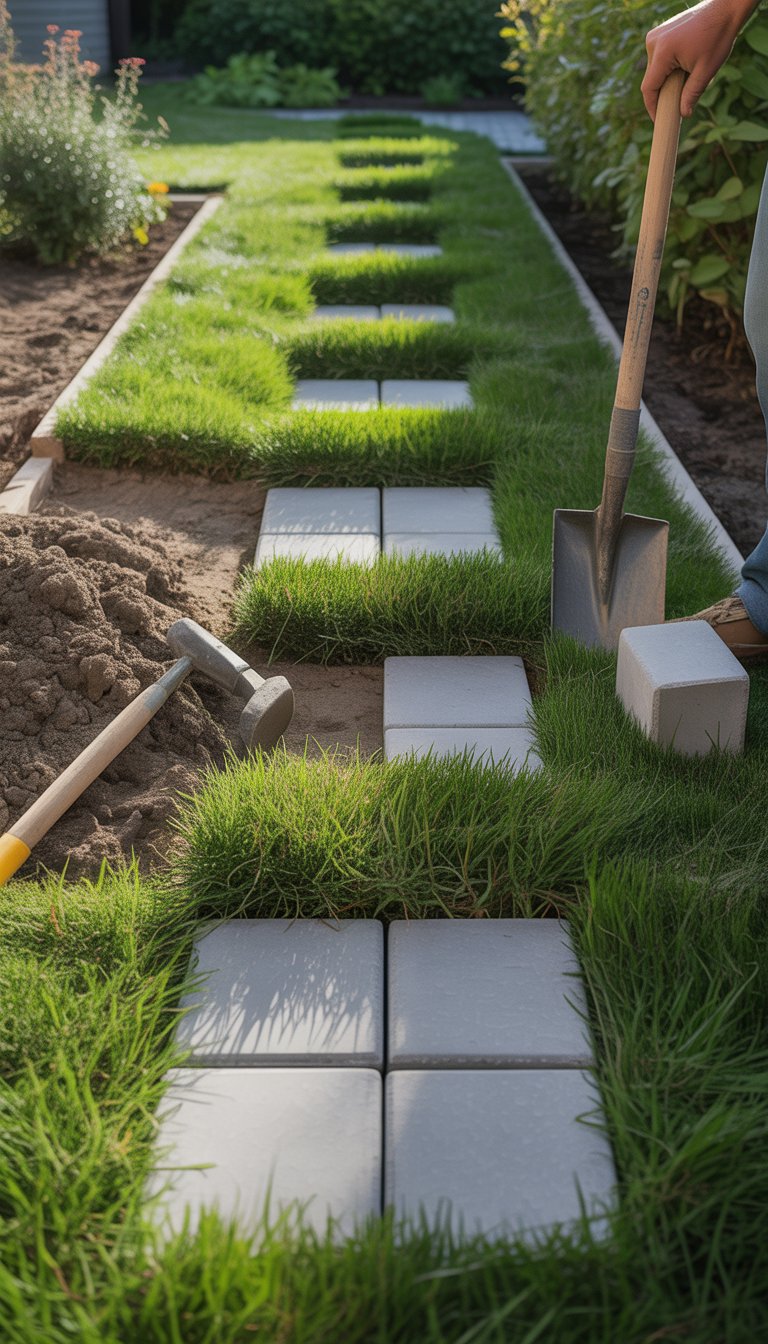
I’ve found that using 16×16 concrete pavers is a smart choice if I want a walkway that’s both budget-friendly and easy to build. I just pick up the pavers at my local store for a low price.
What I do first is mark the path where I want the walkway. Then I use a shovel to cut out the patches of grass in the shape of each paver.
After that, I place each concrete paver right into the cleared spot. Sometimes I tap them down with a mallet to get them level. If I need more help, I check out tips from others who use this method, like this walkthrough shared on Reddit about 16×16 concrete pavers.
DIY Cobblestone Walkway Using Salvaged Stones
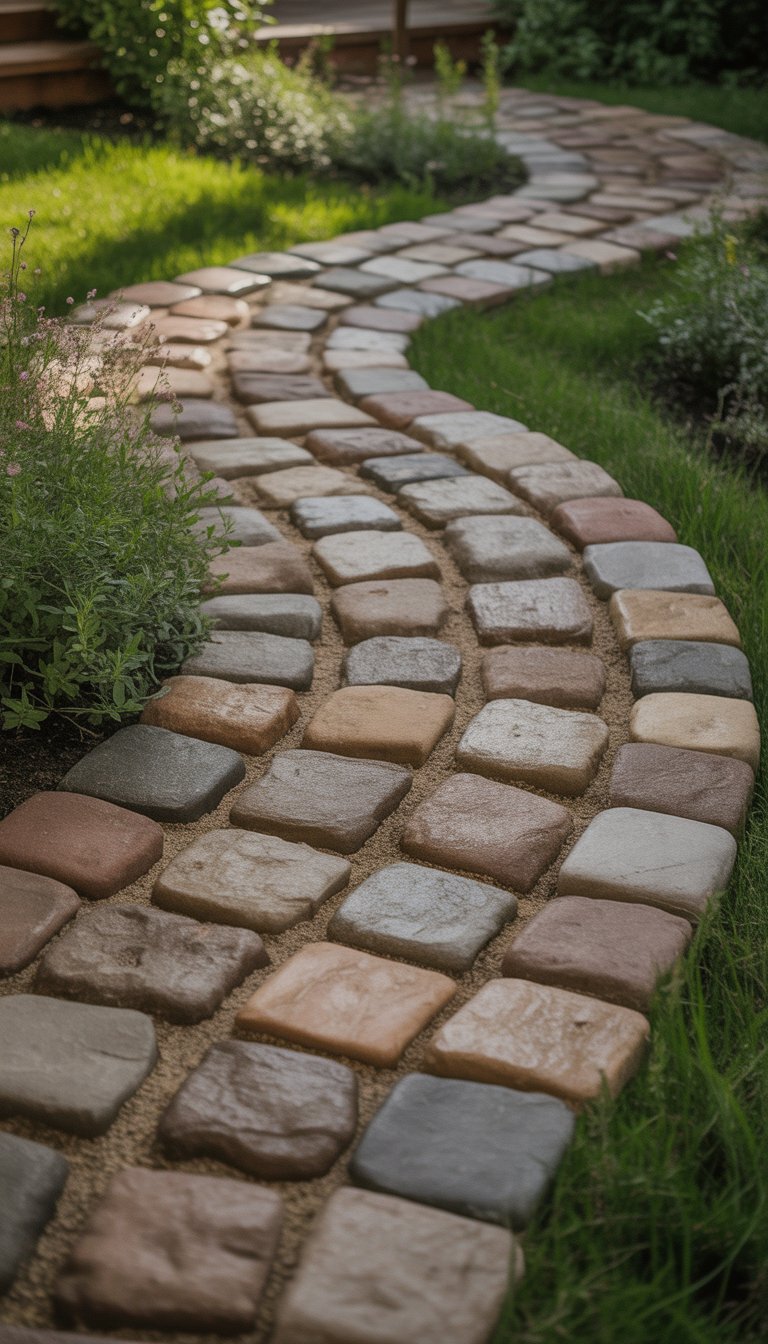
I really enjoy making my own cobblestone walkways, and I find it rewarding to use salvaged stones. It feels good to reuse materials that might have gone to waste. I often collect stones from old construction sites or even from my own backyard.
Laying out the stones can be like solving a fun puzzle. Sometimes I mix different shapes and sizes to add character. I like to set the stones on a simple bed of sand or gravel for stability.
For filling the gaps, I use small gravel or mulch. It keeps weeds down and helps the walkway look neat. Building a path this way saves money and gives my garden a rustic, unique touch. For more inspiration, I check ideas from sites about DIY garden paths with salvaged stones.
Easy Flagstone Path with Sand Base
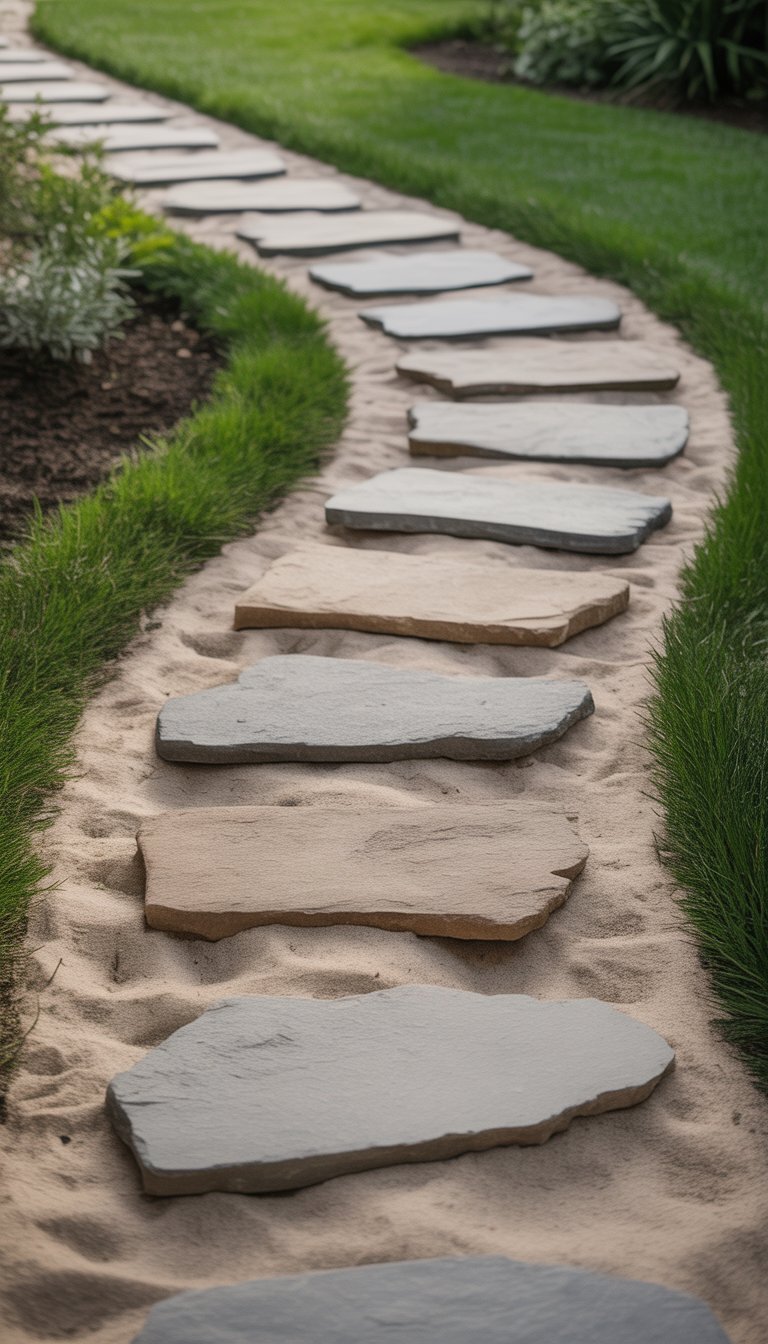
I love using flagstone for walkways because it always looks natural in my yard. Starting this project, I pick out some good-sized flagstone pieces that fit together well. I lay them out on the ground first to see the best pattern and spacing.
Instead of a thick gravel base, I use sand. It’s much lighter to work with and easier to smooth out. I spread a layer of sand, about two inches thick, and press it down flat.
Next, I set the flagstones in place. I press each piece firmly into the sand so it sits level. Then, I fill the gaps with more sand or small groundcover plants.
If you want more ideas or tips for a budget-friendly stone path, check out these inexpensive stepping stone walkway ideas.
Recycled Tire Stepping Stones Path
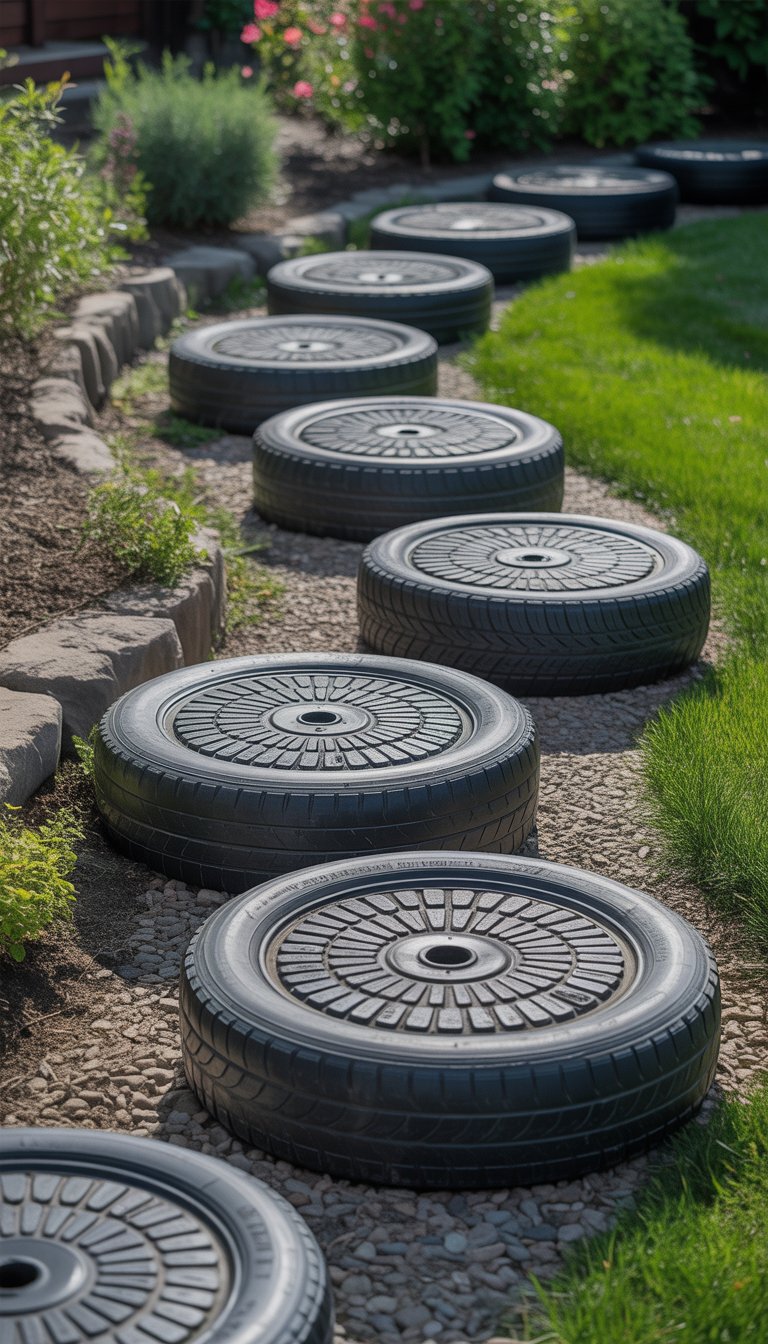
I love turning old tires into fun and useful garden projects. Making stepping stones from tires is one of my favorite ways to save money and reuse materials.
First, I cut the tires into shapes or sections that work as path steps. I usually clean and paint them with bright colors to make the walkway pop.
These recycled tire paths are tough and handle rain or sun without a problem. I place each tire piece right on the ground or fill them with gravel, sand, or concrete for extra strength.
For more tips, I found a helpful video guide on how to make DIY step stones from tires. This project is easy to do and great for families who want a budget-friendly path.
Stepping Stones with Painted Designs
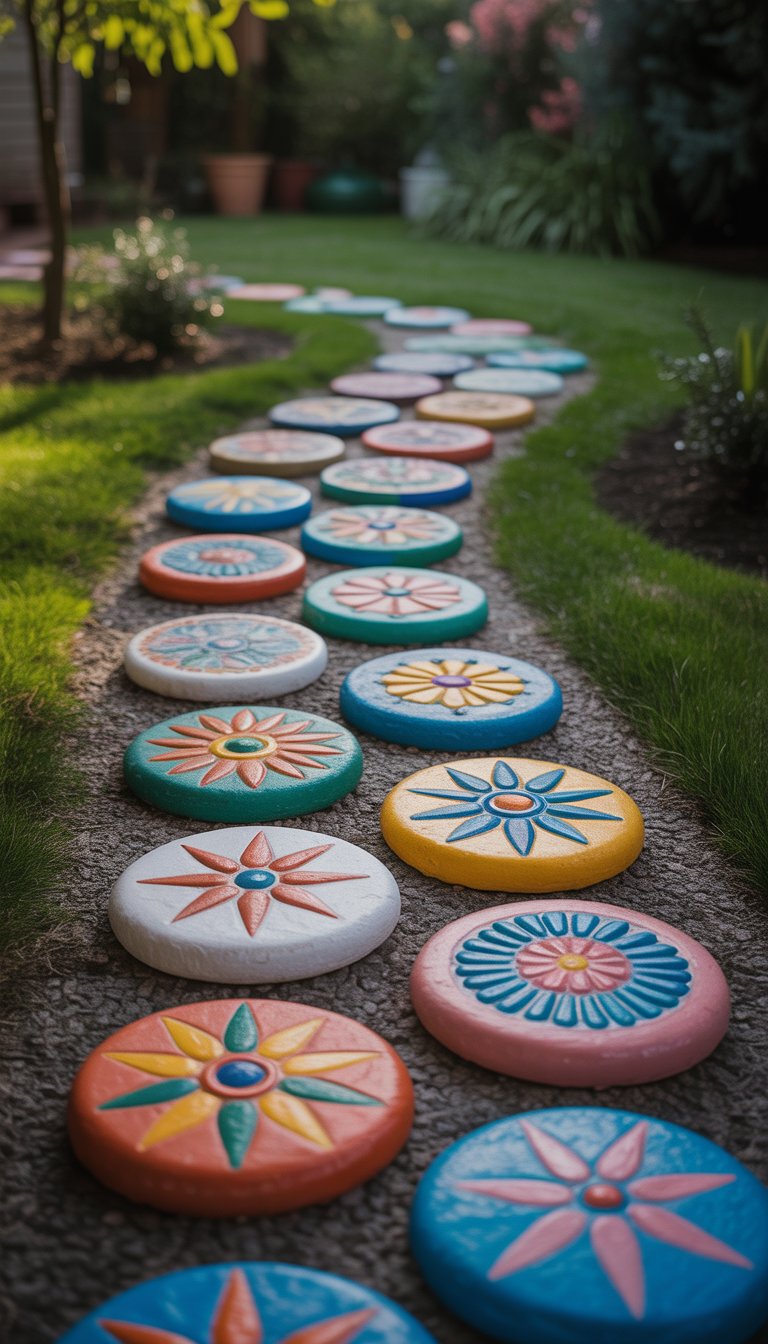
I love how simple painted stepping stones can brighten up any walkway. With just a few supplies, I can take plain stones and turn them into fun, colorful features for my yard. Even if I’m not an artist, easy patterns like polka dots, stripes, or simple flowers always look good.
Sometimes I let the kids help, and we create handprints or silly faces. Painted stones can tell a story or guide guests through a garden path. I use outdoor paint so my designs last in the weather.
After painting, I make sure to seal the stones for extra protection. It’s an affordable way to add personality and charm to my walkway, and each piece feels unique. If I’m looking for inspiration before starting, I like browsing ideas on Pinterest.
Natural Stone Path with Moss Infill
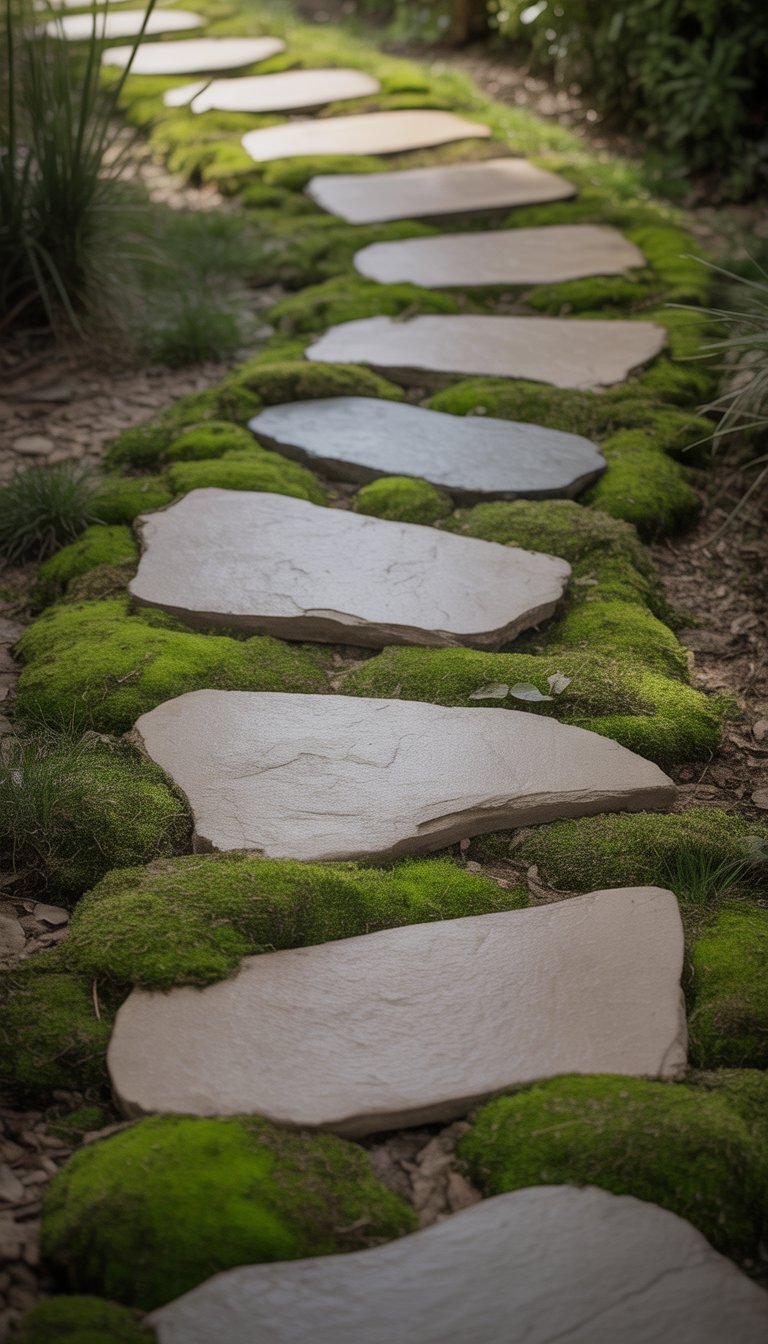
I love using natural stone for walkways because it blends right in with the yard. Each stone is different, so I get a unique look every time. Picking stones with flat surfaces makes walking easy and safe.
For in-between the stones, I tuck in moss. It softens the space and brings a calming, green touch. Moss doesn’t need much care, which I appreciate.
Laying the stones takes some patience, but I just set them in the dirt and adjust as needed. If I want inspiration or tips, I check out projects like the DIY stone pathway with moss that cover the steps.
This style works for shady, damp spots where moss can thrive. I find the final path invites me to wander my garden and enjoy the quiet.
Simple Cement Paver Assembly
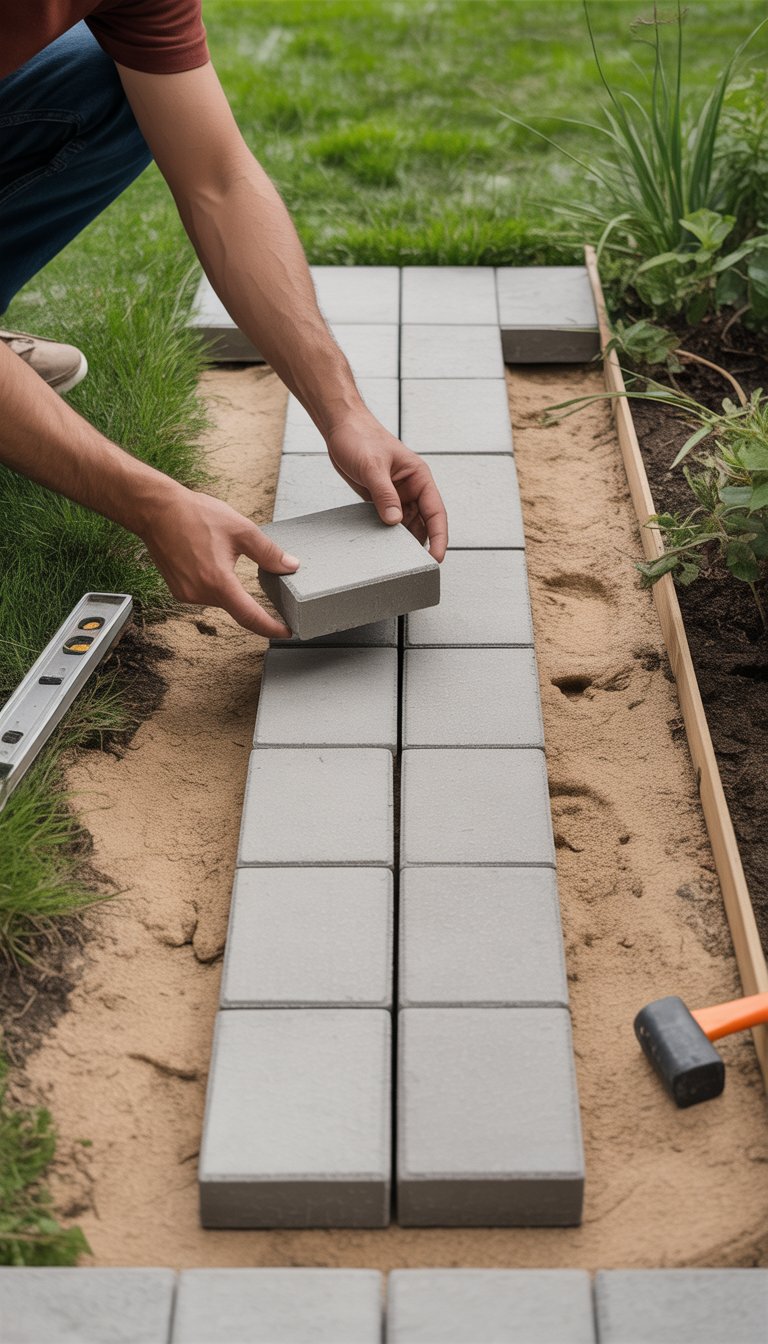
I love how easy it is to work with cement pavers for a walkway. First, I plan the path by laying out my pavers on the ground. This lets me see the shape and spacing before I start setting them in place.
Once I have the layout set, I dig out small, shallow holes for each paver. I make sure these spots are level so the pavers don’t wobble.
For a budget-friendly base, I use sand or gravel. I press the pavers down gently and check they’re even as I go. Sometimes, I fill the gaps with gravel or mulch for a finished look.
If you need more ideas, check out this list of cement paver walkway inspirations. It always helps me come up with fresh designs!
Planning Your DIY Walkway Project
I always believe a solid plan is the heart of every successful DIY walkway. Picking the best materials can save money without giving up style, and careful measuring helps prevent waste and frustration.
Choosing the Right Materials on a Budget
When I want to save money but still create a beautiful path, I look for options like gravel, mulch, wood chips, or reused bricks. These materials are easy to find and cheaper than poured concrete or fancy stone. Sometimes, I use concrete step stones or make my own with molds.
Making a list of what I need helps me avoid buying too much. I check local hardware stores for sales, and sometimes people give away old bricks or stones online. Here’s a quick table with budget material ideas:
| Material | Pros | Average Cost (per sq. ft.) |
|---|---|---|
| Gravel | Easy to install, drains well | $1–$2 |
| Mulch | Natural look, soft to walk on | $1–$2 |
| Wood Chips | Inexpensive, easy to spread | $1–$3 |
| Reused Bricks | Eco-friendly, unique look | Free–$3 |
| Concrete Stepping Stones | Custom shapes, sturdy | $2–$4 |
For creative ideas, I sometimes check lists of cheap DIY garden path materials online to get inspired.
Measuring and Plotting Your Pathway
Accurate measuring keeps my project on track and under budget. First, I pick where I want the walkway and use a garden hose or rope to lay out the shape. Then, I mark the edges with spray paint or flour.
I make sure the path is wide enough—at least two feet wide for a single person to walk comfortably. For twists and turns, I allow extra space at the corners.
Next, I measure the total length and width so I know how much material to buy. It helps to draw a simple diagram with measurements. This becomes my guide during shopping and building. By spending time on planning and marking, I avoid running out of materials or ending up with a path that doesn’t fit the space.
Maintaining Your Affordable Walkway
Keeping a DIY walkway in good shape is just as important as building it. Staying on top of regular care helps it last through changing weather and heavy foot traffic.
Tips for Longevity and Durability
I always start by using sturdy materials like pea gravel, bricks, or concrete step stones. These options don’t break down quickly and are easy to replace if needed. When I lay the path, I make sure to dig down a few inches and use a layer of landscape fabric. This stops weeds and keeps the path from sinking or shifting.
Edging is a must for me. Whether it’s stone, metal, or wood, edging keeps the materials in place and makes the walkway look neat. For gravel paths, I rake the stones back into place if they start to spread out. If I notice any bricks or stones coming loose, I push them back or fill in gaps right away.
Here’s a quick summary in list form:
- Pick durable path materials
- Use landscaping fabric to prevent weeds
- Install solid edging
- Regularly fix loose pieces
Simple Seasonal Upkeep Ideas
Each season, I set aside some time for easy maintenance. In spring, I check for any winter damage. I remove any debris, like fallen branches or leaves, that might block the walkway. If I use mulch or wood chips, I top them off so the path stays level, as suggested in tips from Epic Gardening.
Summer brings weeds, so I pull them out by hand or spot-treat with vinegar. After heavy rain, I rake gravel or wood chips back into their rows if they’ve washed out of place. In the fall, I clear off leaves so they don’t turn into slippery mush.
During winter, I use a broom to sweep away snow or ice from hard paths like brick or concrete. I avoid using salt, which can wear away certain surfaces. My simple routine keeps my walkway looking good all year.
Frequently Asked Questions
When I plan DIY walkways, I always look for ways to keep costs down while making sure the path adds beauty and lasts. There are plenty of creative tricks for using simple, affordable materials to get a unique look without much work.
How can I create an inviting walkway on a tight budget?
I usually start by picking materials that are cheap but still look appealing. Gravel and mulch are both easy to use, spread quickly, and cost much less than stone or concrete.
I sometimes add potted plants or solar lights along the walkway to boost curb appeal without spending a lot.
What are some affordable materials I can use to build a durable garden path?
I find gravel, mulch, and even wood chips are some of the cheapest and most available options. For something more solid, I use concrete stepping stones or reclaimed bricks.
Wooden pallets also work for unique paths if you have time to pull them apart and arrange the boards. Brick and gravel are both low cost and easy to install, but mulch might be the easiest to maintain for busy people.
What are some creative yet inexpensive DIY walkway ideas?
To add character, I like placing concrete stepping stones in a zigzag or random pattern through grass. Laying a brick path in a simple herringbone or basket weave pattern looks classic but uses minimal material.
I’ve also styled paths with leftover wood from pallets or by outlining walkways with large rocks or recycled edging materials. Find more on these creative walkway patterns at Epic Gardening.
Can you suggest low-maintenance options for an attractive DIY walkway?
If I want something really easy to keep up, I go with mulch or gravel. Both of these only need to be topped up every year or so, and they drain water well so there’s less mud.
Concrete stepping stones set right into the grass stay neat and only need the grass trimmed around the edges. Gravel paths with landscape fabric underneath are also great for keeping weeds away.
How do I design a charming front-of-house walkway without breaking the bank?
I often suggest lining a gravel or mulch path with bricks or wood edging for a tidy look. Adding a slight curve, even in a small space, makes the walkway more inviting.
Adding a few lights or even a simple border of plants can give a polished finish without extra cost. For more inspiration, check out these cheap DIY garden path ideas.
What innovative methods are there for crafting inexpensive stepping stone paths?
I’ve made stepping stones using poured concrete in homemade molds or even using old concrete pavers. Setting these into grass or mulch creates a playful feel.
Another fun project is arranging odd-shaped stones or leftover tiles in patterns. Using recycled materials like pieces of wood, bricks, or even large flat rocks can save money and add a one-of-a-kind touch. For more tips, see these inexpensive stepping-stone walkway ideas.