Disclaimer: We only recommend products or services that we believe will add value to our readers. By using these affiliate links, we’ll receive a commission if you purchase through our link, at no extra cost to you. Please read full disclosurehere
Every time I walk into my garden, I feel a sense of calm and joy. There’s something special about hearing the gentle trickle of water, seeing sunlight bounce off smooth stones, and watching birds and butterflies come for a visit. I’ve learned that small garden waterfalls can turn even the simplest backyard into a peaceful escape, no matter the size or style of the space.
The right water feature turns an ordinary yard into a place filled with beauty, relaxation, and inspiration. As someone who loves spending time outdoors, I know how important it is to create a space that feels personal and inviting. Whether I’m gathering with friends or enjoying a quiet moment alone, the soothing sound and look of a garden waterfall makes my space feel like a dreamy getaway I never want to leave.
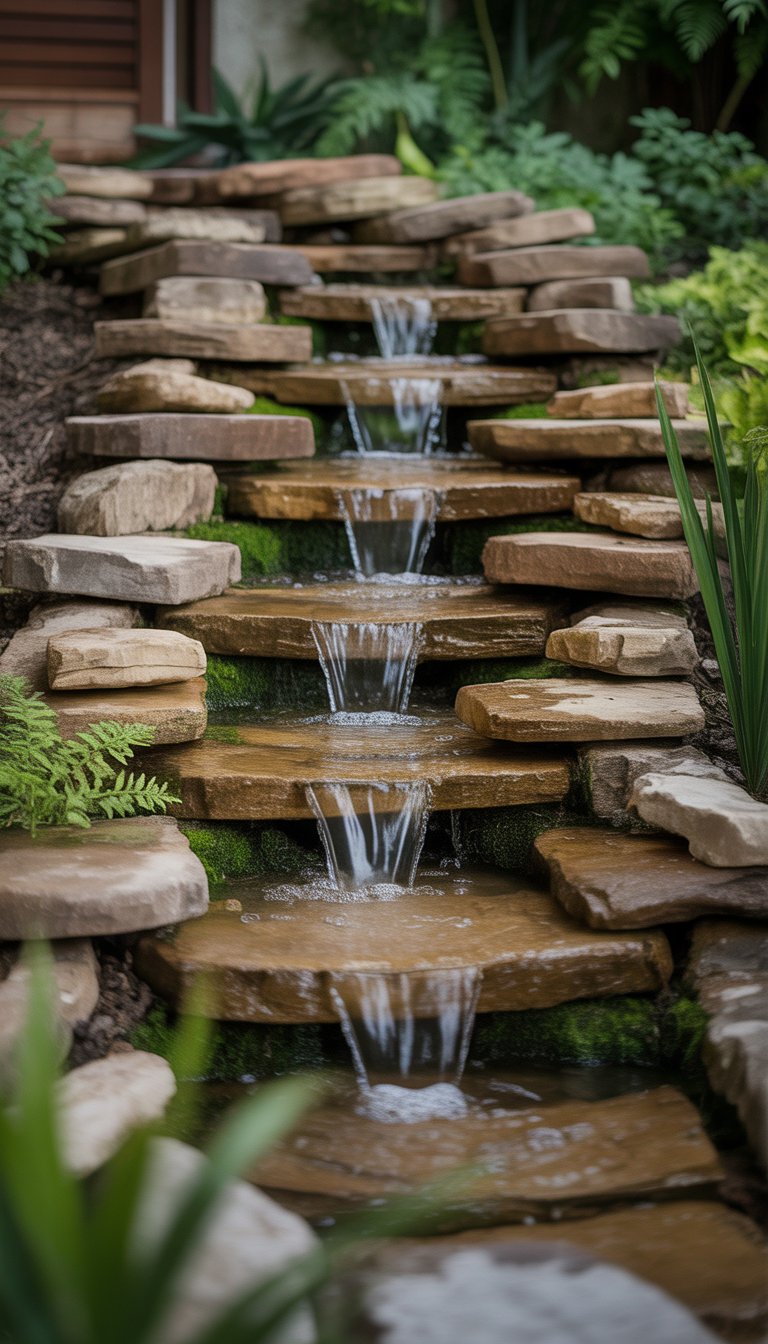
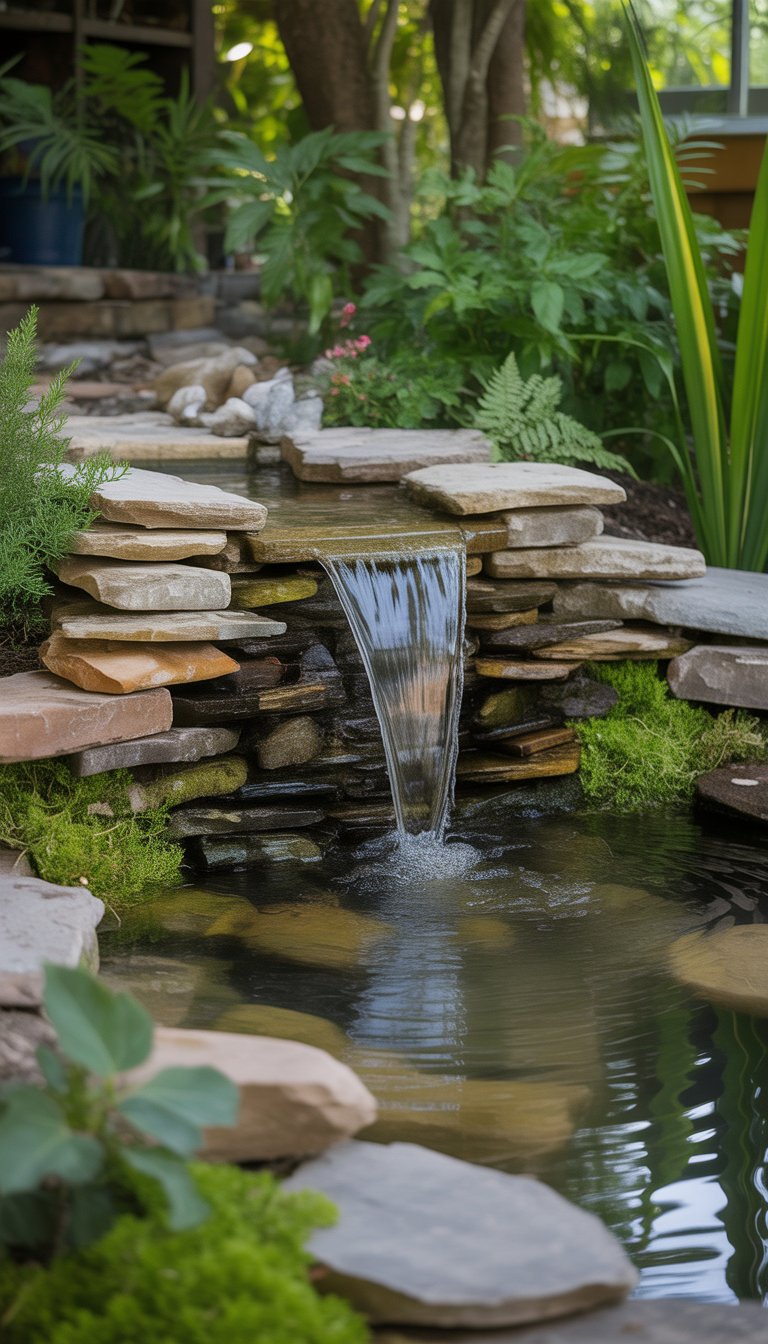
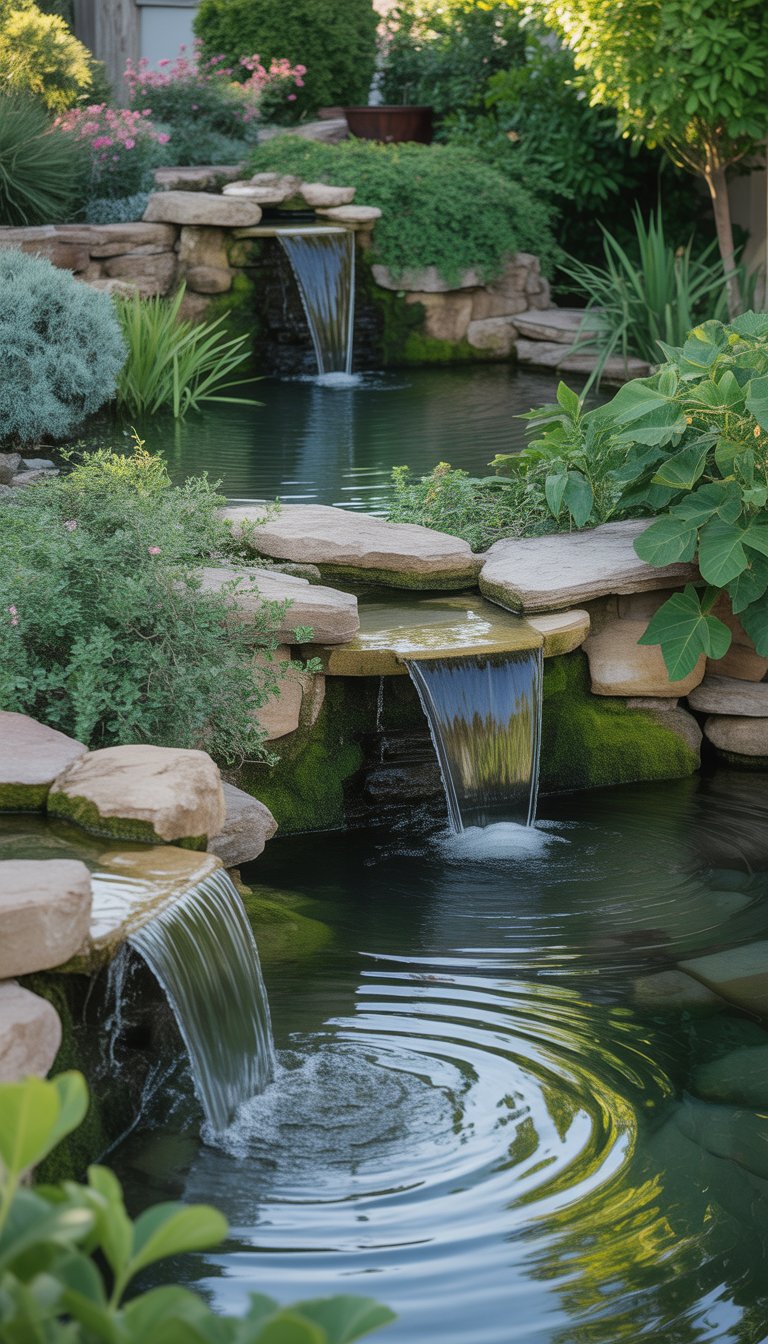
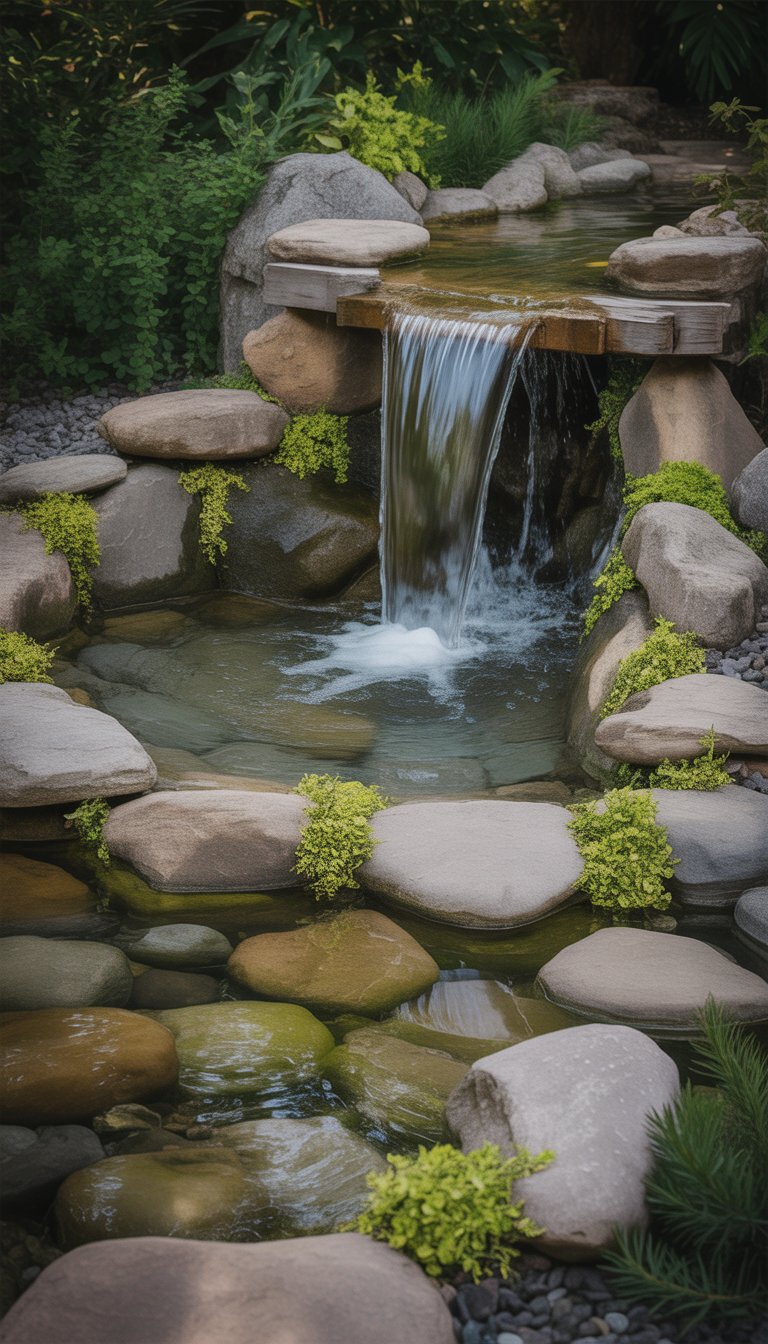
Use rough stones arranged in a staircase shape for a natural waterfall look
When I started building my first small garden waterfall, I went with rough stones instead of smooth ones. Their uneven edges made everything look more like a real stream you’d find in the woods. I found that stacking the stones in a staircase shape gave the water a gentle path to flow down.
I set each layer a little higher than the one before it. This helped the water move smoothly without splashing everywhere. It also looked great from every angle in my yard.
If you want to try this, you don’t need fancy supplies. Look for rough stones at your local garden shop. Arranging them like stairs can turn any garden corner into a relaxing spot. For more tips, check out these natural-looking waterfall ideas that inspired me.
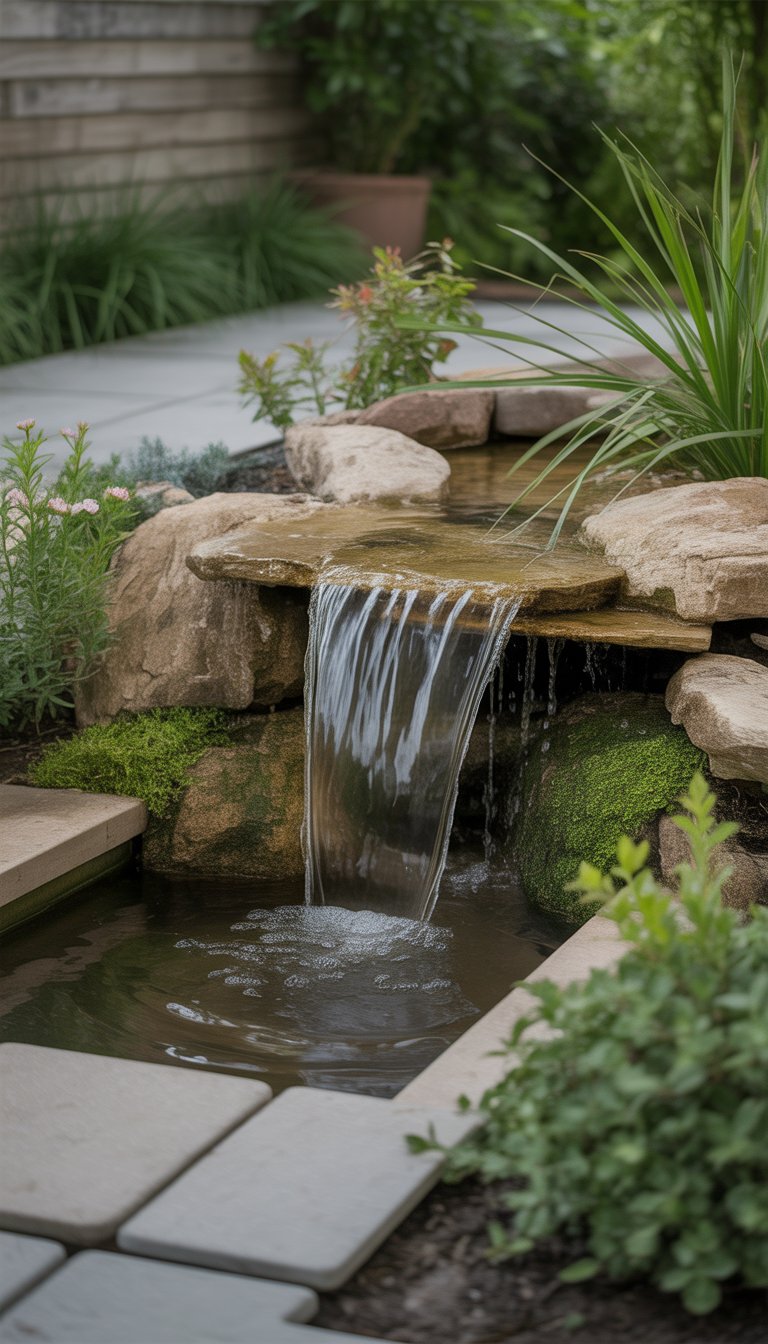
Create a pondless waterfall to save space and reduce maintenance
I love having moving water in my garden, but I don’t want all the work of a full pond. That’s why I chose a pondless waterfall. It fits right into smaller spaces and keeps things simple for me.
There’s no pond to clean or worry about. The water just disappears into a hidden reservoir below the rocks. I get the sound and look of a waterfall, but I don’t have to spend hours fishing out leaves or cleaning algae.
For my yard, a pondless waterfall brought energy and peace at the same time. The setup uses gravel and rocks to cover the in-ground basin, so it blends in really well. These features can be placed even if your yard is flat or not very big. Learn how to build one from this DIY guide.
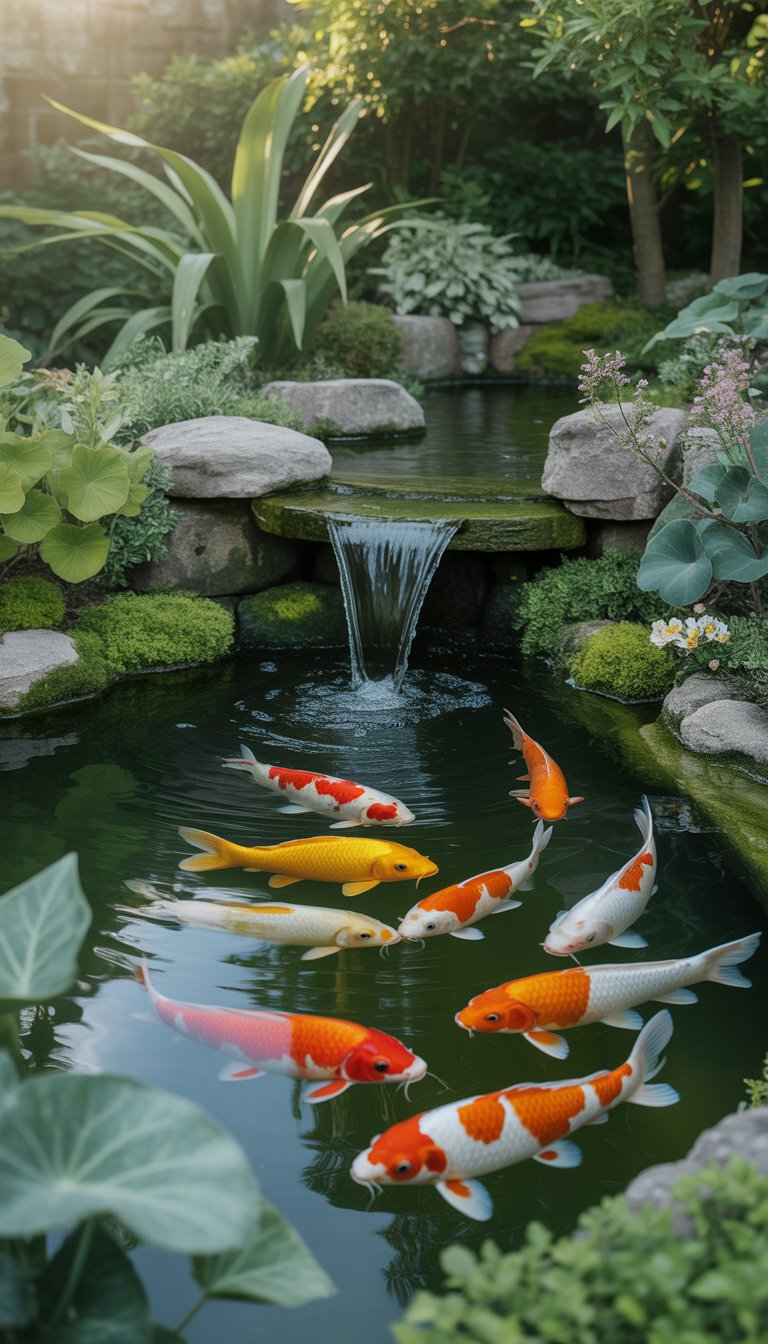
Incorporate a small koi pond with a gentle waterfall feature
I love mixing the beauty of koi fish with the relaxing sound of moving water. Even a small koi pond can transform my backyard into a peaceful spot. Watching koi swim while listening to a gentle waterfall helps me unwind after a long day.
Building a small pond doesn’t need much space. I often use corner spots or areas near patios. Adding a waterfall to the pond makes the water fresh and clear.
For ideas, I sometimes look through photos and tips, such as those found on Pinterest’s koi pond and waterfall ideas. I find that using rocks and water plants around the pond creates a natural look.
Small ponds with waterfalls don’t just look nice—they also create a calming place for me to relax outdoors.
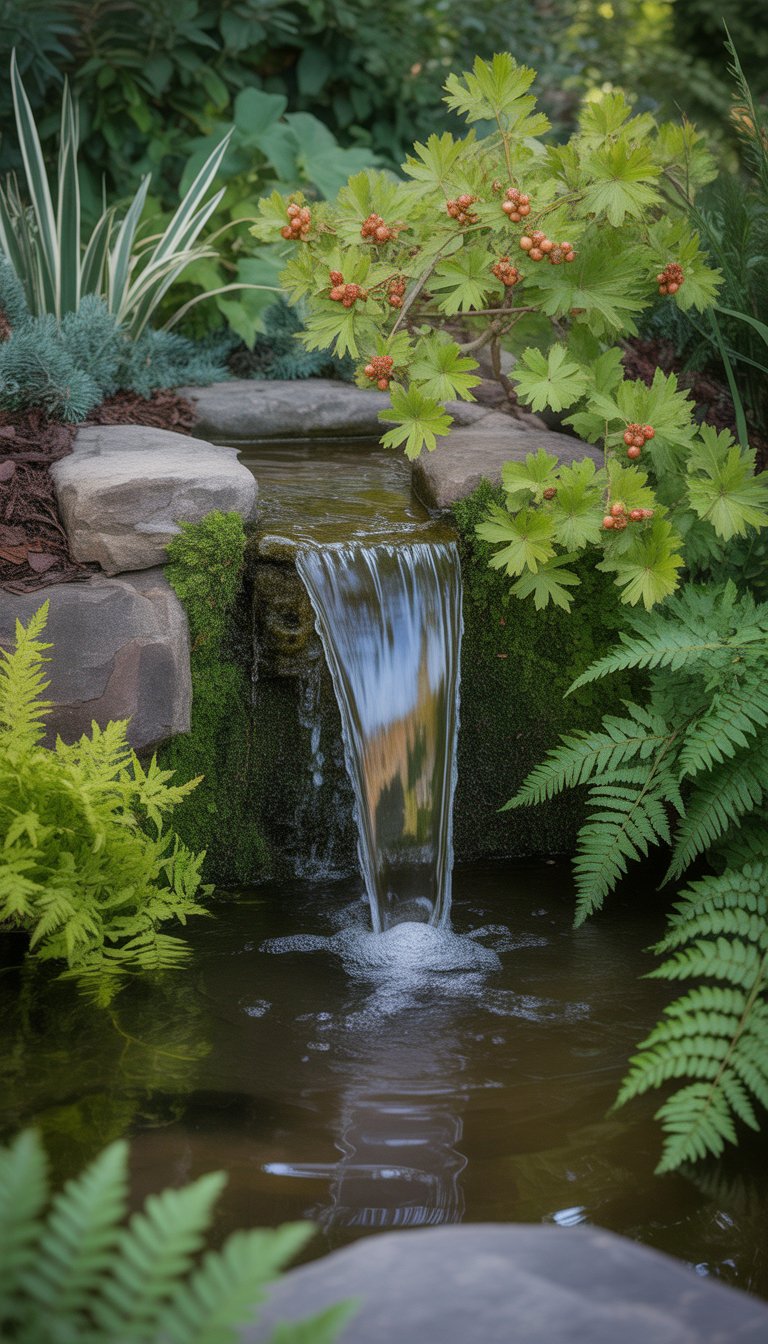
Add native Oregon plants like water hawthorn around your waterfall
I like to plant Oregon native species to make my waterfall look natural and healthy. Water hawthorn is a favorite of mine. It’s pretty and grows well in ponds and small water features.
Native plants help attract local wildlife like frogs and dragonflies. I often add plants such as rushes and duckweed too. These choices support a thriving little ecosystem.
When I plan my garden, I choose plants that will grow well in Oregon’s weather. This way, my waterfall looks beautiful all year. You can find more ideas for native plants from local pond enthusiasts.
Using native plants makes the garden look relaxed and inviting. I love watching my waterfall blend in with the natural landscape. It always feels peaceful and welcoming.
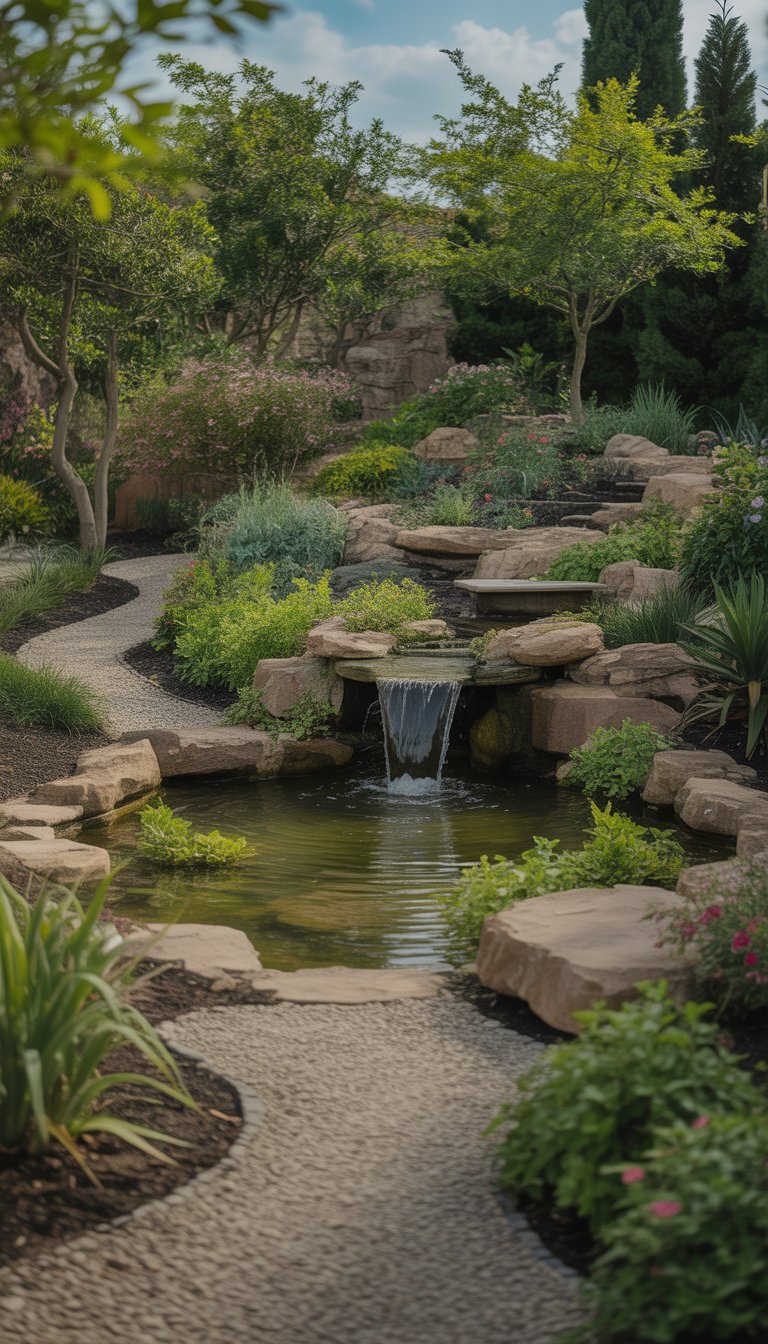
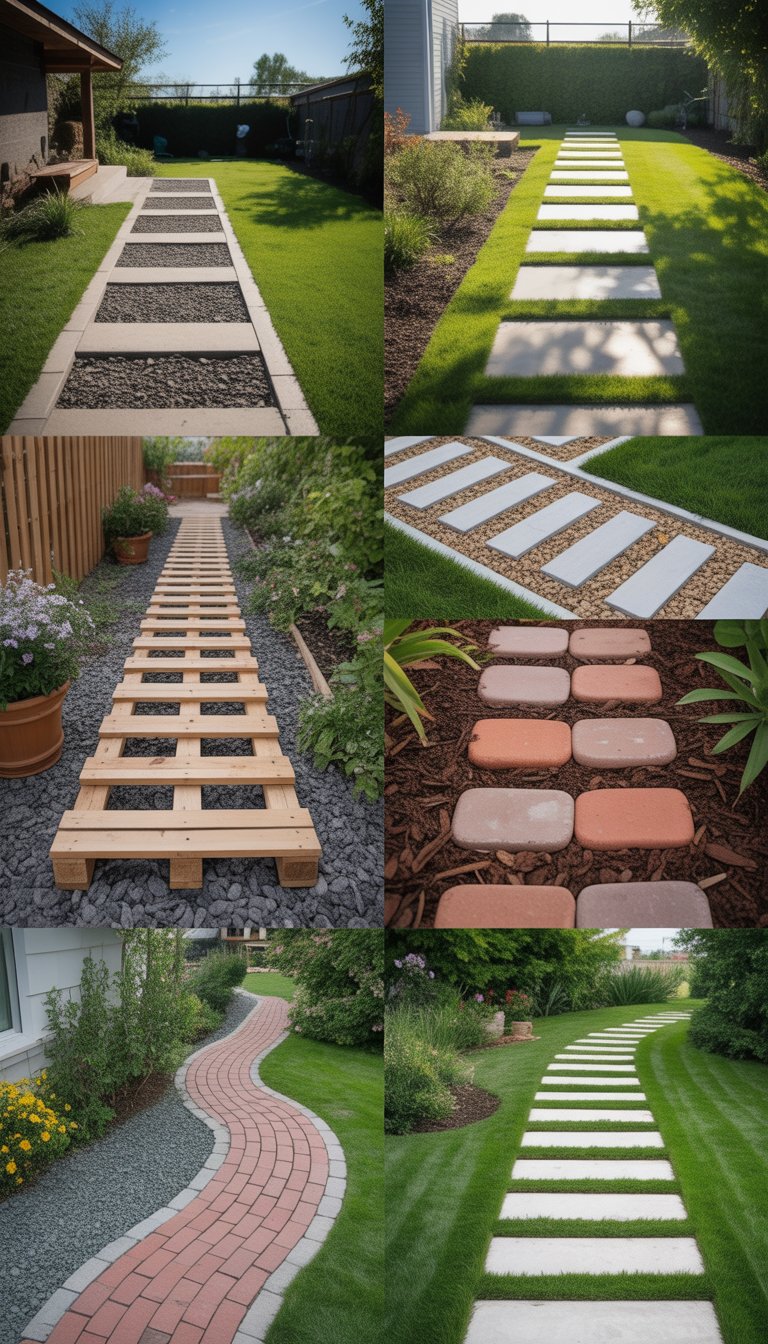
Use gravel pathways to guide guests to your waterfall oasis
I love how gravel pathways can lead friends right to my favorite spot in the yard. The sound of gravel underfoot always feels calming and brings a bit of nature’s charm closer to home.
I usually choose a color for the gravel that matches the rest of my garden. It helps the path blend in while still guiding the way. Lining the path with small stones or simple edging also keeps it neat.
When the path curves around plants and flowers, it makes the walk feel like a little adventure. It’s simple to create and doesn’t need much care, but it adds a lot to the whole backyard look.
If you want to see how others have used gravel paths with water features, check out these backyard waterfall ideas for inspiration.
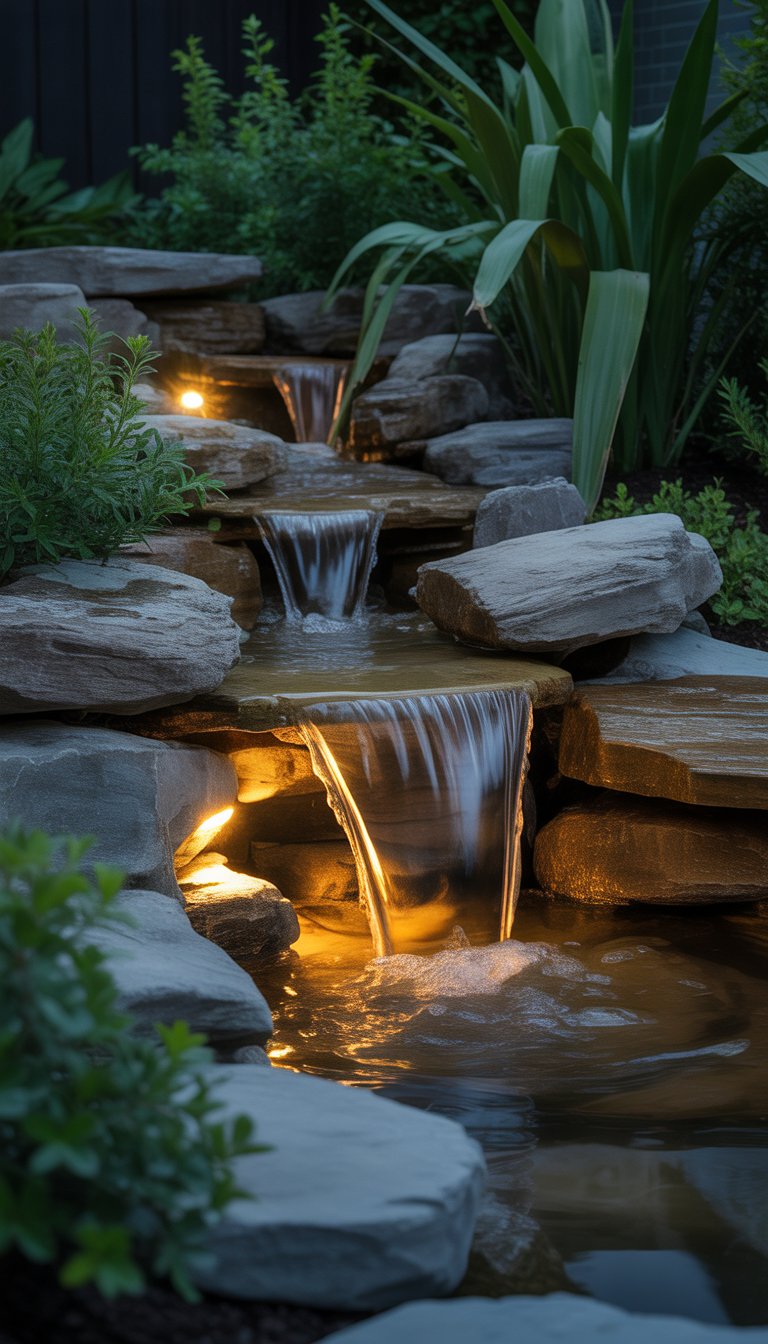
Install subtle LED lighting under rocks to highlight the waterfall at night
I love how a waterfall comes to life after dark with the right lighting. I often tuck subtle LED lights under the rocks around my waterfall. This creates a soft glow that really brings out the beauty of the water after sunset.
LED lights are small and easy to hide. I like to use waterproof ones for safety. Placing them right under the rocks means only the light, not the fixture, is visible.
It’s amazing what a warm light can do for the look and feel of my garden. The moving water catches the light in different ways, adding a calming effect. If you want ideas, garden lighting designed for waterfalls works well for this.
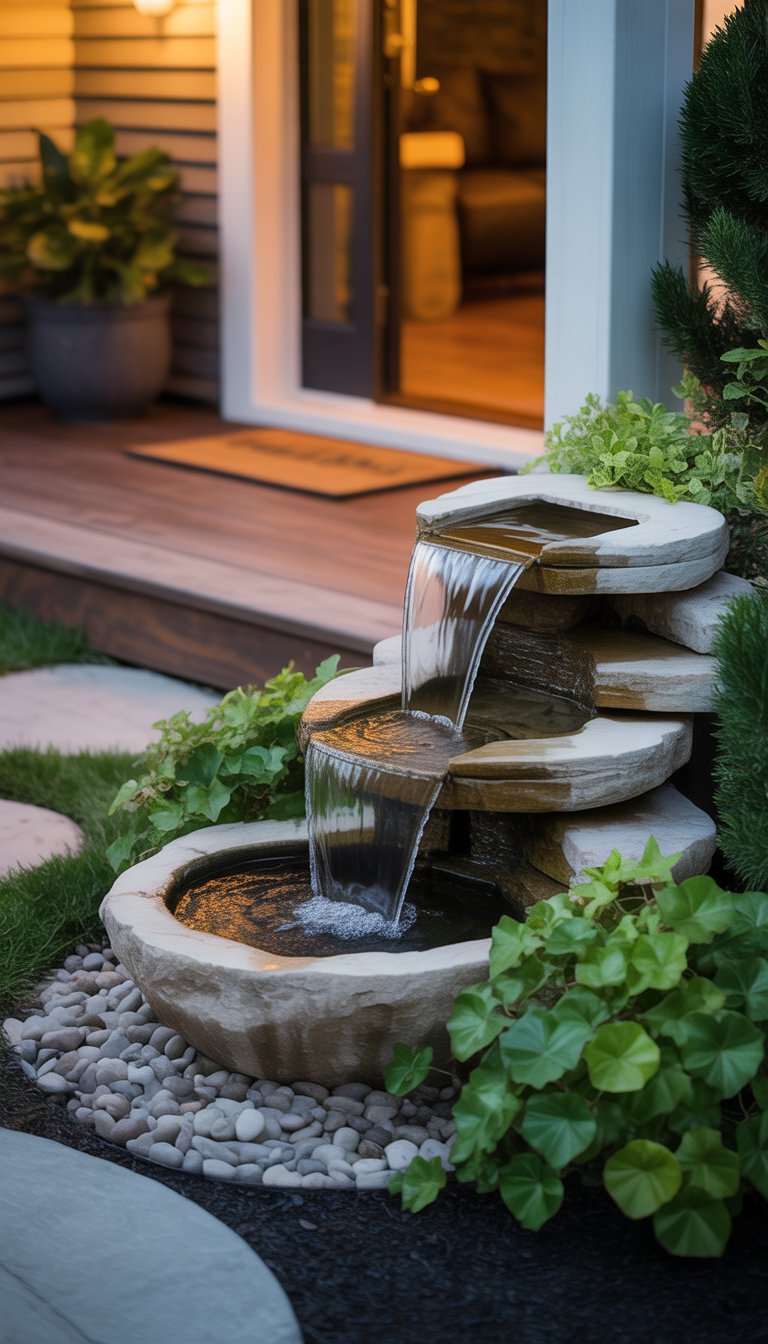
Build a waterfall on a porch for soothing sounds near your home entrance
I love stepping onto my porch and hearing the gentle sound of water. Building a small waterfall here makes the entrance feel more inviting right away. The water helps drown out traffic noise and creates a calm spot before I even walk inside.
I find that even a simple design works well in small spaces. I can use rocks, a small pump, and a basin to keep things easy. Some people use a ready-made fountain kit, which saves time and effort.
Adding plants or a few outdoor lights around the waterfall makes it look even better, especially in the evenings. The sound of flowing water by my front door is peaceful, and I’ve noticed it attracts a few curious birds, too. For more inspiration, I checked out a list of small outdoor fountain ideas.
Combine waterwalls to create vertical waterfalls in small spaces
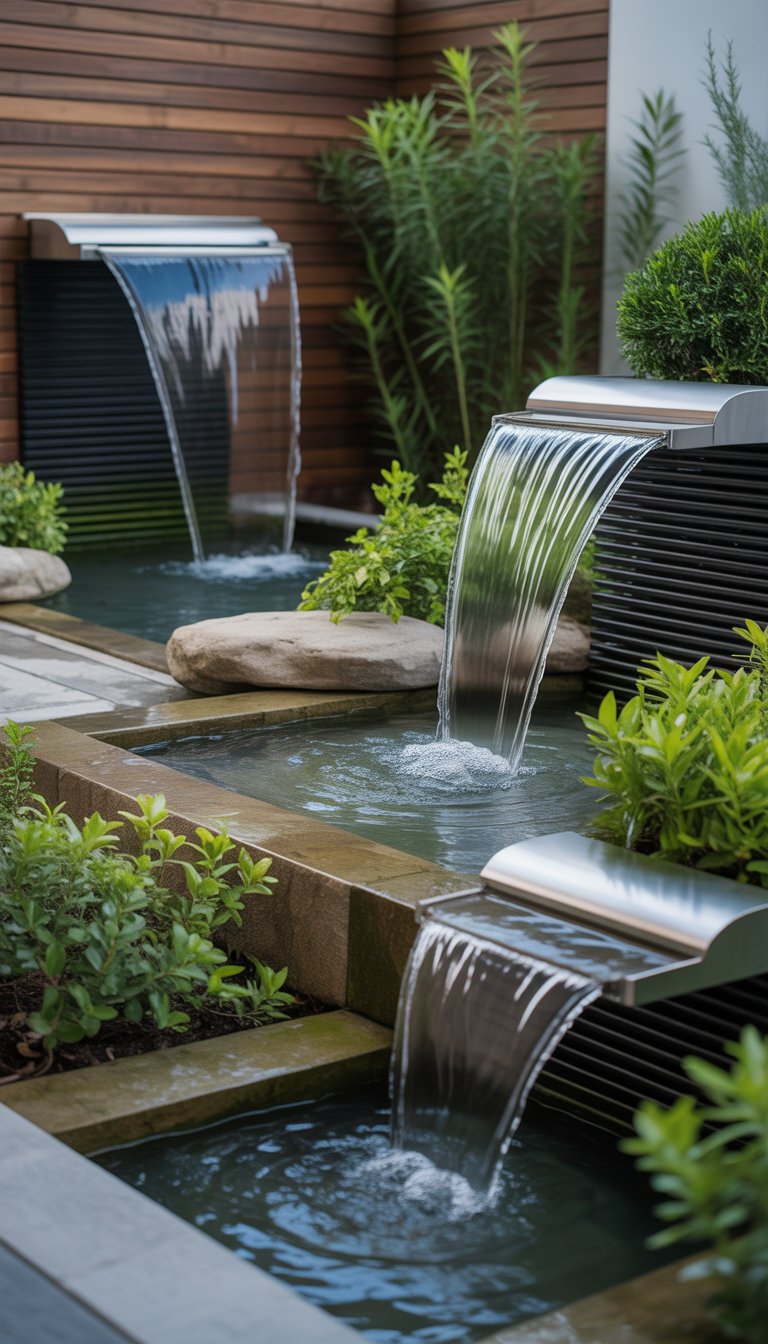
I like using waterwalls when I want a modern look in a small garden. Waterwalls let water fall smoothly down a vertical surface, making the area feel calm without needing much space. They work well against fences or walls.
When I add a vertical waterfall, I save ground space that can be used for plants or seating. The sound of the water helps relax me after a long day. I can use simple materials like stone or glass to fit my style.
Building a vertical waterfall can be simple or detailed, depending on my time and budget. For more ideas on how to use waterwalls as waterfalls, I find it helpful to look at different waterwall options. Even small gardens can have a big impact with the right setup.
Integrate music elements for a multi-sensory waterfall experience
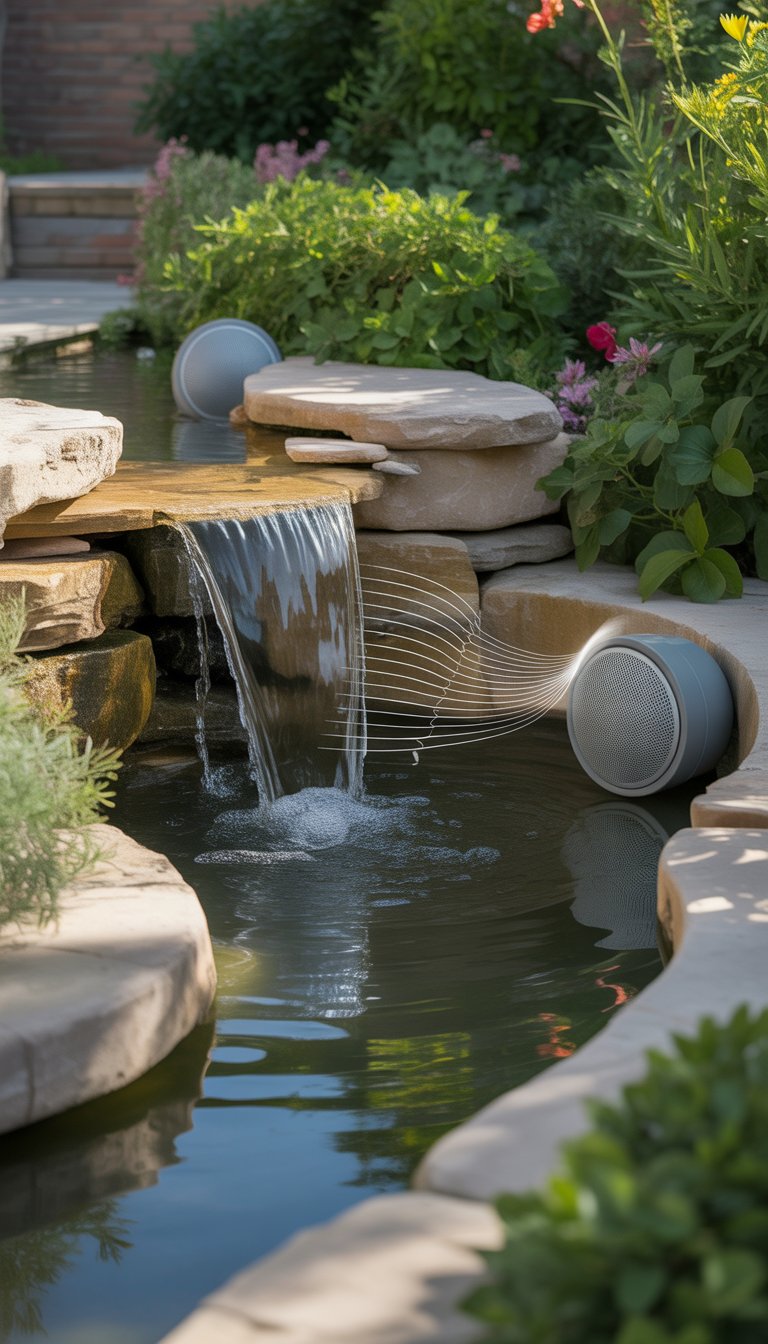
I love adding music to my garden with my waterfall. Even simple wind chimes or small speakers can create a relaxing atmosphere around the water. The gentle blend of water sounds and soft melodies always makes my space more welcoming.
Sometimes, I place Bluetooth speakers behind rocks or plants to hide them. I choose nature-inspired tracks or gentle instrumentals. The mix of these sounds with flowing water helps me unwind after a long day.
I’ve learned that moving water isn’t just about sight. The splash and trickle can join with music for a richer experience. This way, my garden feels almost magical and really draws me in.
If I want to try something else, I use waterproof wind chimes nearby. I find that different sounds can make the garden feel fresh and new each time I sit outside.
Use recycled stones and materials to build an eco-friendly waterfall
I love building garden features that are budget-friendly and good for the planet. Whenever I start a project, I look for old bricks, rocks, or wood that I already have at home or can get for free.
By using recycled stones, I give new life to things that might have been thrown away. It’s a great way to save money and create something unique. Old bricks and loose rocks make a charming and natural-looking waterfall.
I’ve even seen people get creative with wood and other reclaimed materials. These eco-friendly choices look beautiful and feel rewarding. For more ideas and inspiration about making your own DIY waterfall with recycled materials, you can check out tips online and see what fits your space.
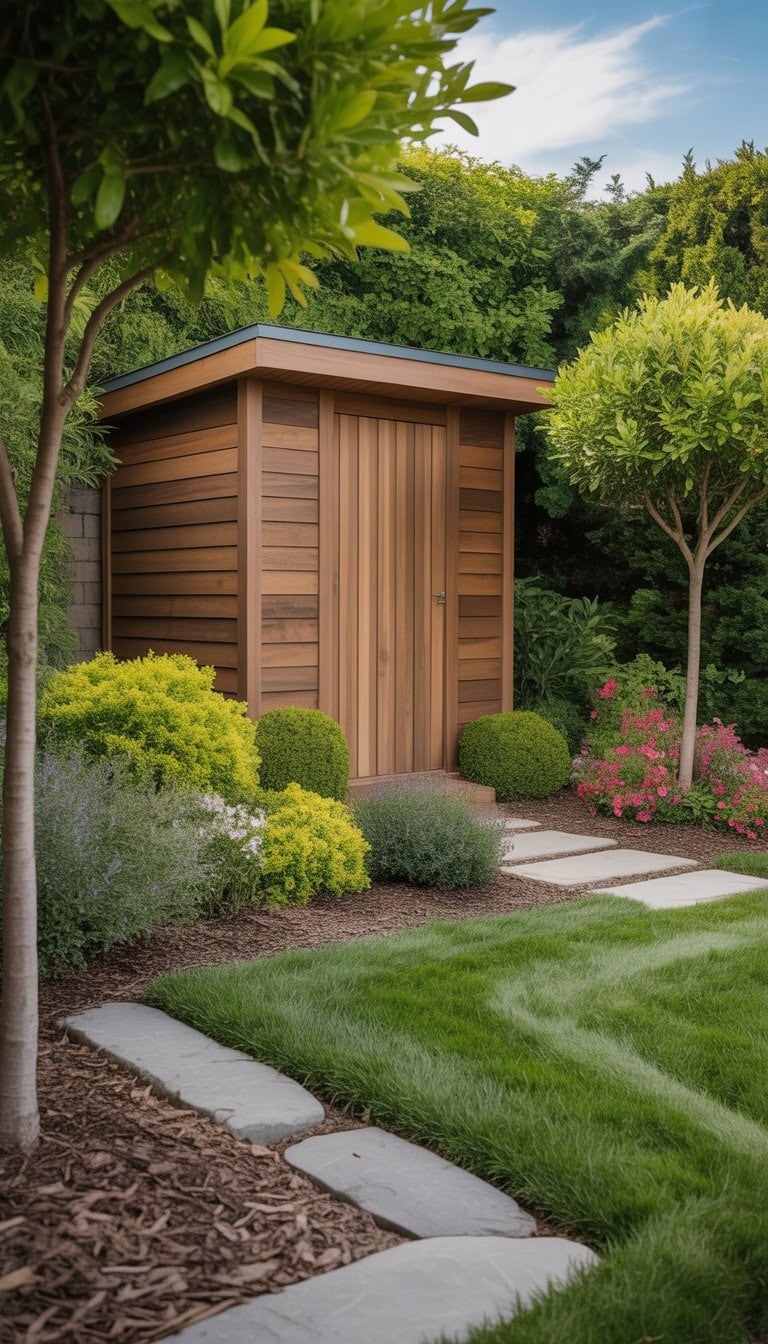
Add a wooden fence backdrop to frame the waterfall and add privacy
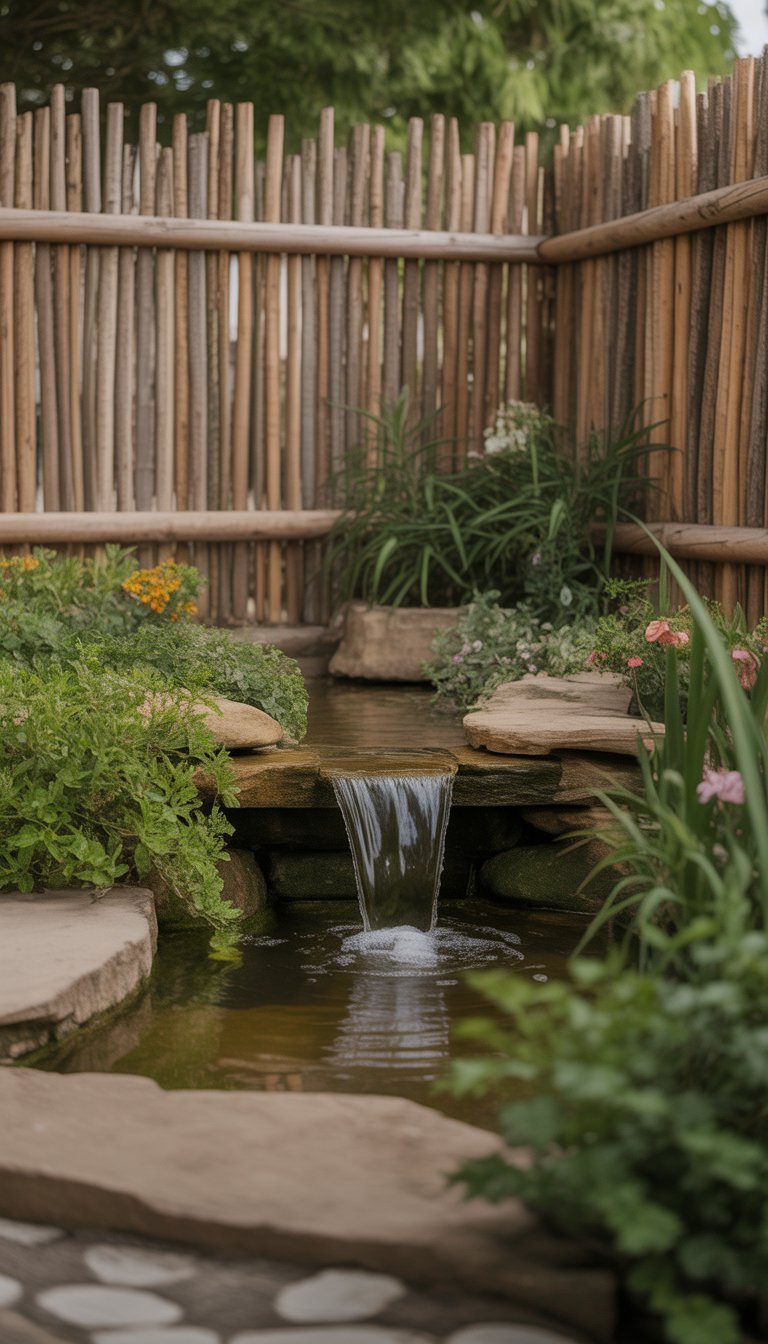
I love using a wooden fence as a backdrop for my garden waterfall. It gives the space a cozy, finished look and helps the waterfall stand out. The wood’s natural color blends well with the plants and water.
A fence also brings more privacy to my garden. It creates a relaxing spot where I can enjoy the sound of water without distractions. I find it especially helpful in small yards that are close to neighbors.
There are lots of fence styles to pick from. I like simple vertical boards or slatted panels for a clean look. If I want to make it more special, I hang plants or outdoor art on the fence, like in the ideas I found on Pinterest.
Building around the fence lets me get creative with lighting and decoration. The waterfall, framed by wood, feels like a hidden getaway in my own yard.
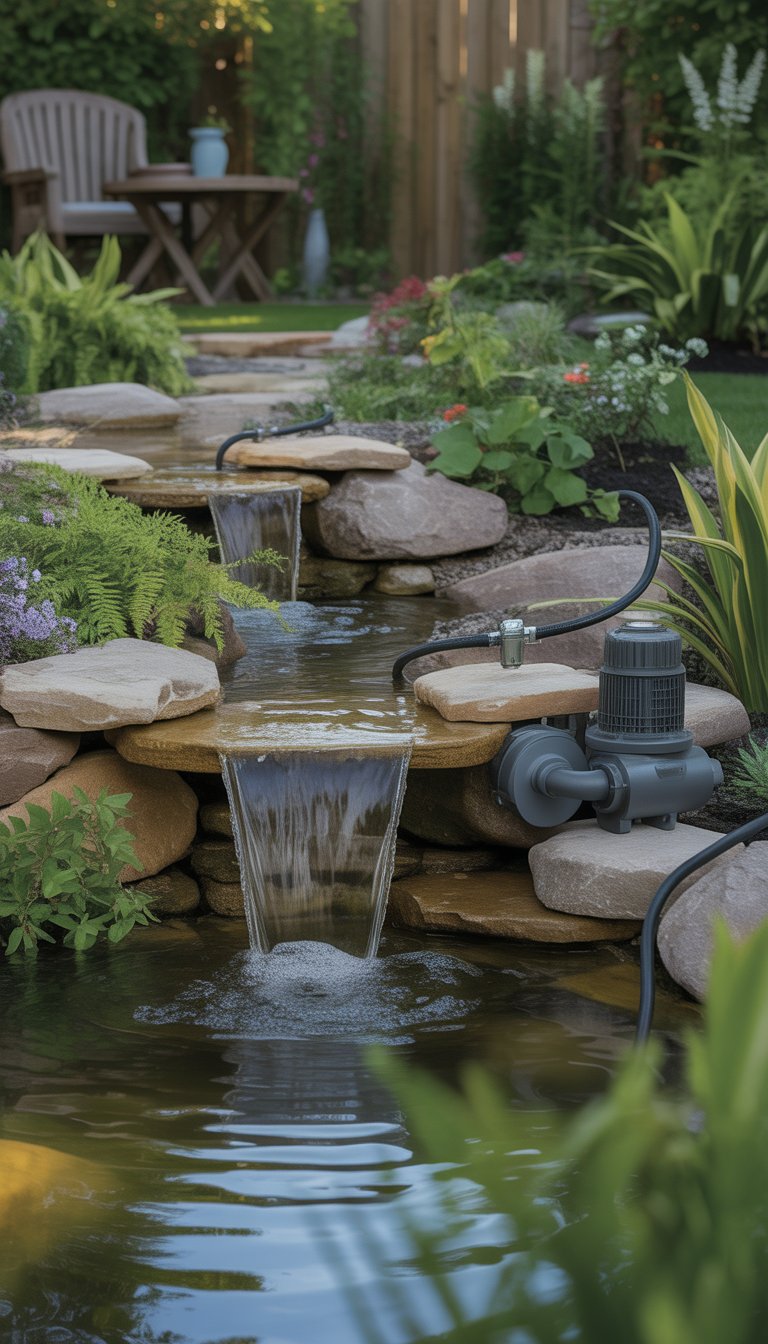
Install a recirculating pump system for continuous water flow
When I want my garden waterfall to really shine, I always install a recirculating pump system. This keeps the water flowing all day without needing fresh water every time. It feels great to see the stream moving on its own.
I place the pump in the lowest part of my waterfall, then use a hose to carry water back up to the top. That way, the same water keeps moving in a loop. It saves me from extra water costs and keeps the sounds of running water constant.
There are easy DIY pump options out there. I found a lot of helpful advice and step-by-step videos for setting up a recirculating fountain system. With the right pump and a little bit of setup, my backyard always feels fresh and lively.
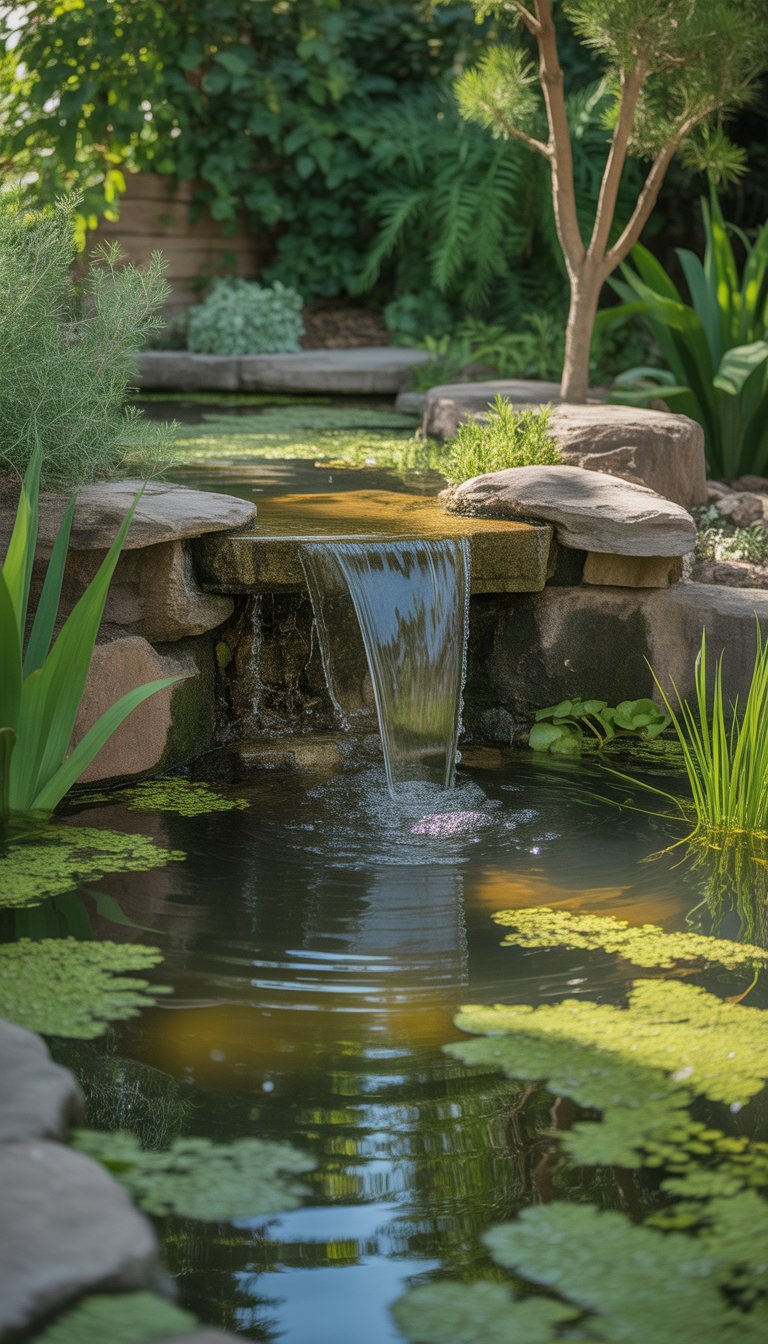
Include fairy duckweed or floating plants for added texture
I love adding floating plants to my garden waterfall because they give the water a peaceful, natural look. Fairy duckweed is one of my favorites—those tiny green leaves float on the surface and move gently with the current.
These plants do more than look pretty. They give shelter for little water creatures and can even help reduce algae since they block some sunlight. I’ve noticed my waterfall looks softer and more alive with a few floating greens.
If you want more variety, try species like Amazon Frogbit or water lettuce. They are easy to care for and grow well on most pond surfaces. Adding even a handful of these floating plants can make your garden waterfall feel like a small, lush pond right in your backyard. To explore different options, you can check out this helpful guide to floating plants.
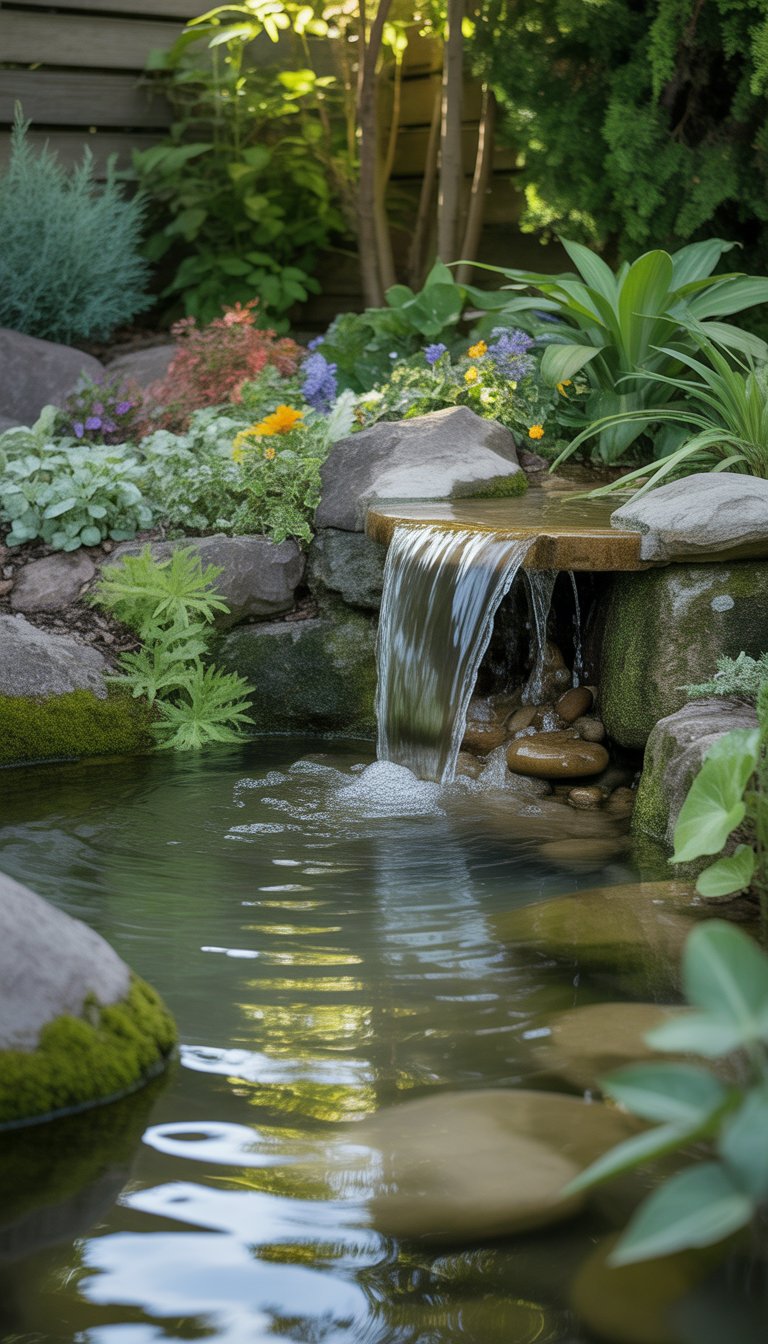
Design waterfalls that cascade gently into small garden ponds
I love how a gentle waterfall can make even the smallest pond feel relaxing and special. When I plan my waterfall, I start by picking rocks or stones that look natural. I try to create small steps or tiers so the water flows quietly, instead of splashing too hard.
I find it helps to keep the water path simple. Smooth curves or a slight angle make the waterfall feel softer. I also use smaller rocks to guide the water and fill empty spaces.
Adding a few water plants at the edge of the pond brings in even more life. These details make my backyard space peaceful and more connected to nature. If you want more ideas, I often look at pond waterfall designs to get inspired.
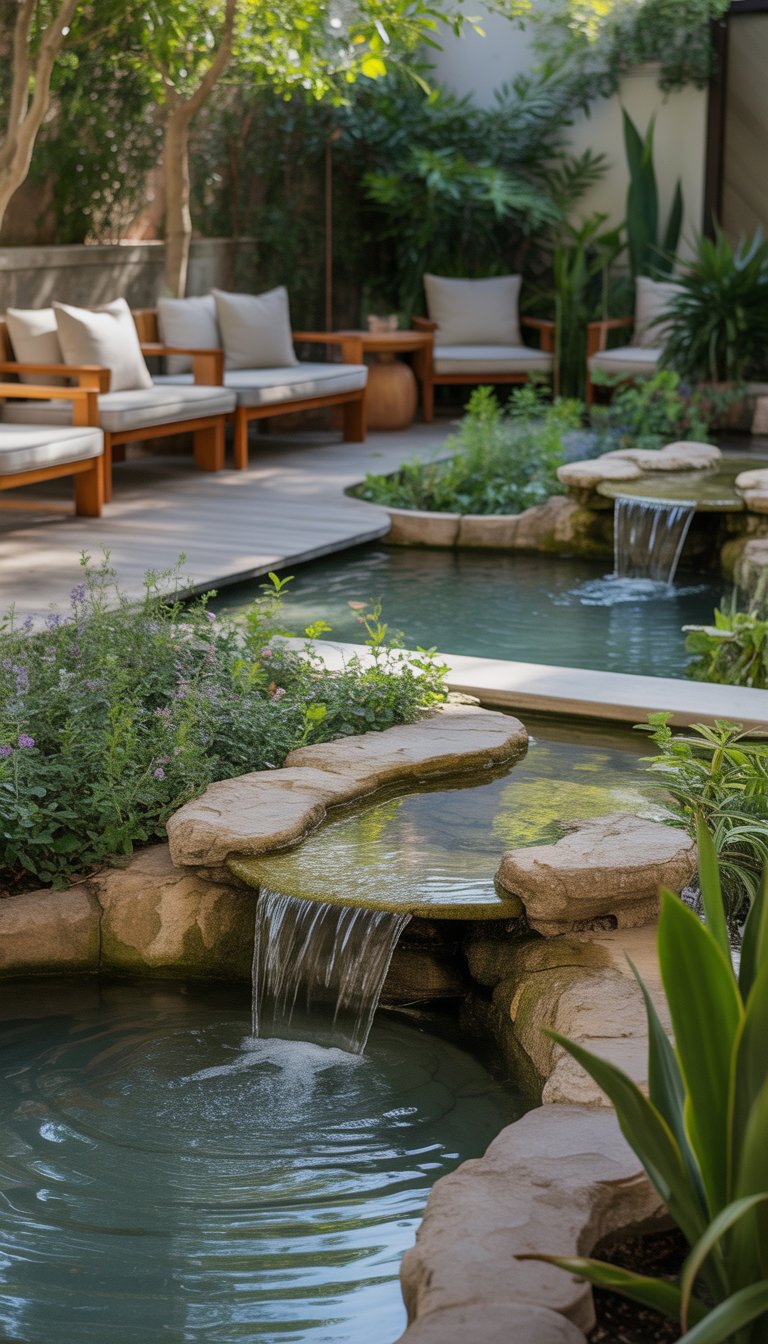
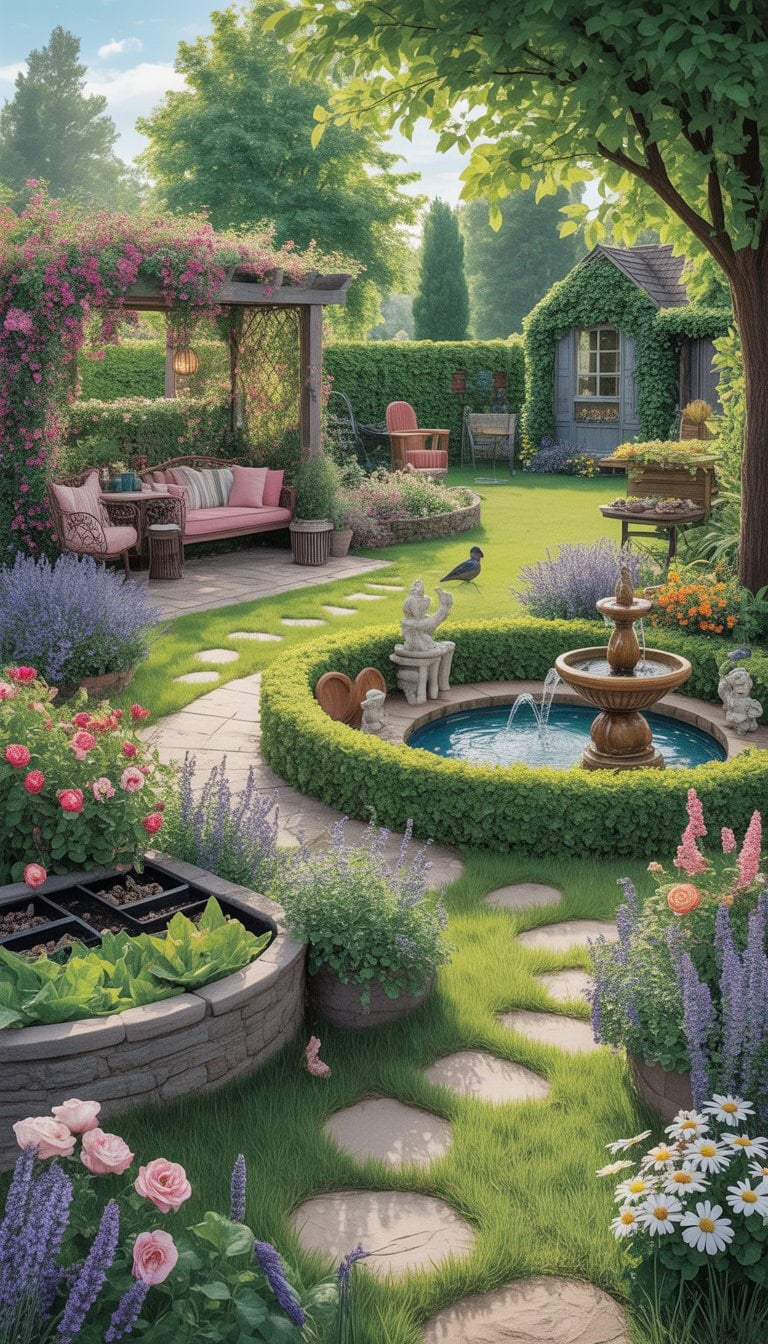
Position waterfalls near seating areas for tranquil relaxation spots
I always look for ways to create peaceful places in my garden. Placing a small waterfall near a seating area turns an ordinary spot into a calm retreat.
When I sit by the water feature, I notice how the gentle sound of moving water helps me unwind. It blocks out street noise and lets me focus on the moment.
Adding a waterfall by my patio or deck also makes it a great spot to relax with friends. The space feels cooler and more inviting, even on hot days.
If you’re looking for ideas, check out these backyard waterfalls that help create a peaceful setting by seating areas: backyard garden waterfall ideas. I found these designs helpful for blending comfort and nature at home.
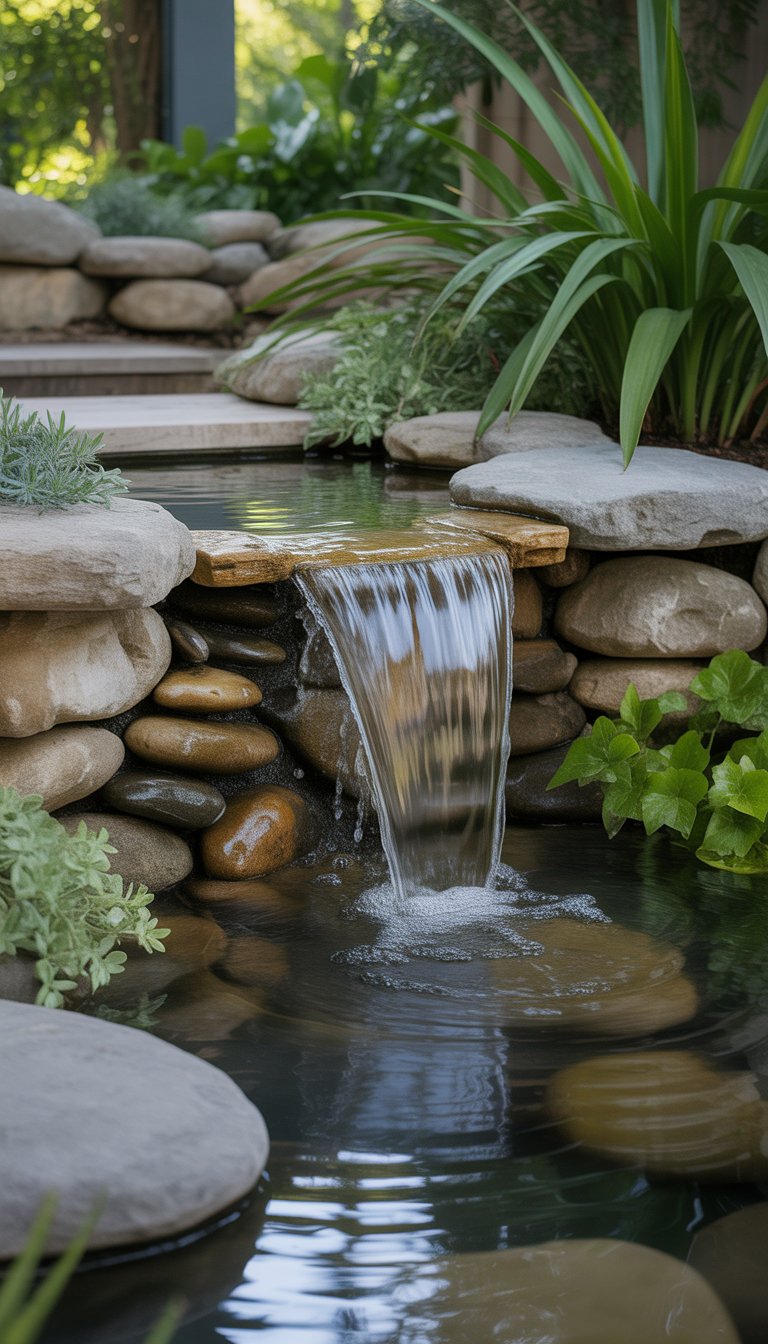
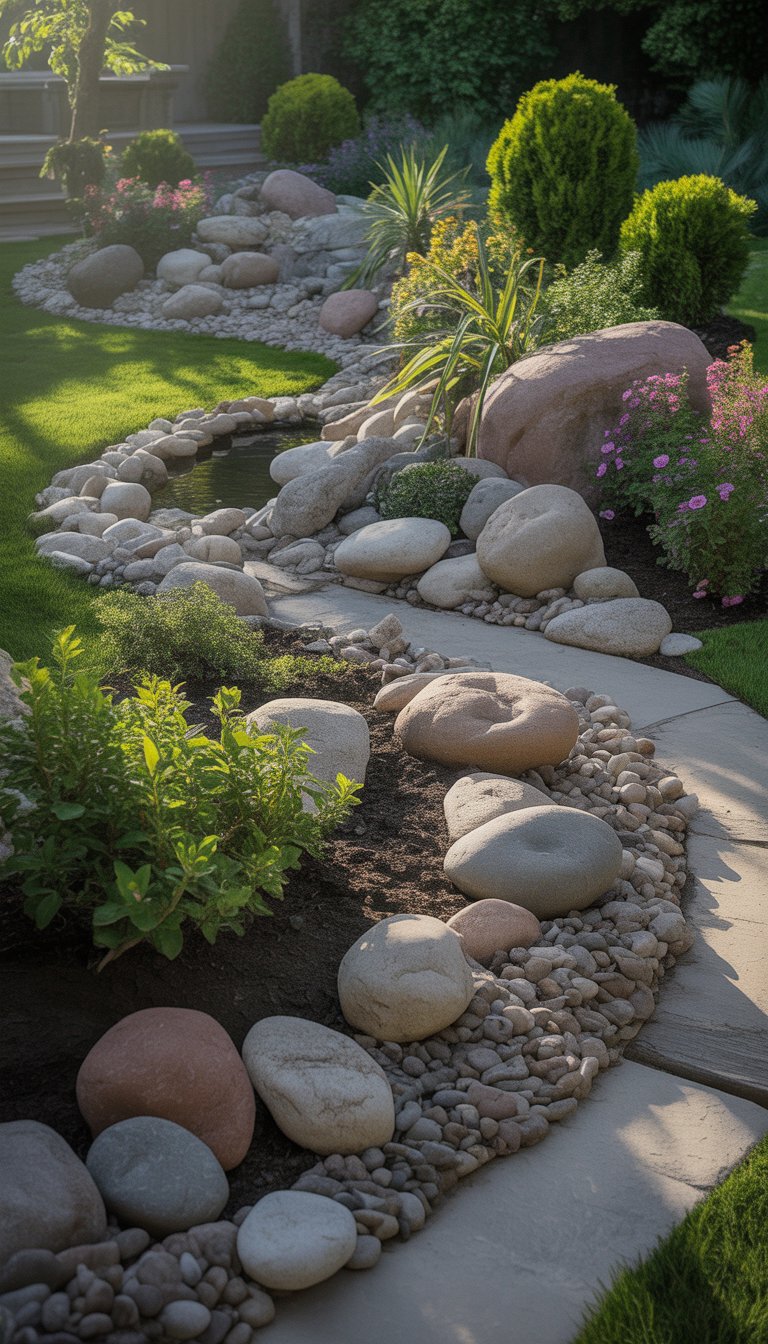
Use smooth river rocks at the base for a polished, calming look
I love using smooth river rocks at the base of my garden waterfalls. These rocks come in different shapes and sizes, but their rounded edges always make everything look neat and natural.
When I arrange them along the bottom, the waterfall feels more relaxing. The water glides over the stones, creating a soft sound and a spa-like mood.
River rocks also help with drainage, which helps keep puddles away. I find this trick especially helpful in low areas of my garden, since these rocks blend well with any design.
Polished river rocks add a gentle shine, especially when they’re wet. It’s a small touch that makes my space feel peaceful and inviting.
Incorporate a simple rock garden around the waterfall for visual interest
I like to keep things natural by adding a simple rock garden around my small waterfall. Using rocks in different sizes helps create layers and keeps the area looking interesting. I often mix bigger stones with smaller pebbles for a more relaxed look.
I pick rocks that blend well with my garden’s other features. Sometimes I add a few stepping stones, so I can walk close to the water and enjoy the sound.
Planting a few low-growing plants or moss between the rocks brings in soft color. This way, my waterfall feels like a natural part of the yard. For more rock garden inspiration, I’ve found helpful ideas from this list of rock gardens and waterfalls.
Water Feature Maintenance Tips
When I take care of my small waterfall, I focus on keeping the water clean and making sure my setup can handle changes in the seasons. Good maintenance lets me enjoy my garden longer and keeps things looking fresh.
Keeping Water Clear and Fresh
I always watch for algae, fallen leaves, and debris. I use a small net daily or every few days to remove anything floating. It helps to trim nearby plants so fewer leaves end up in the water.
I add beneficial bacteria tablets to help control algae and break down waste. A simple, low-power filter or pump helps circulate water and reduce buildup. I check and clean the filter every few weeks.
If the water starts to look cloudy or smell bad, I change out part of it. I avoid using chemicals that might harm birds or pets. I prefer rainwater to refill my pond since it’s gentler than tap water.
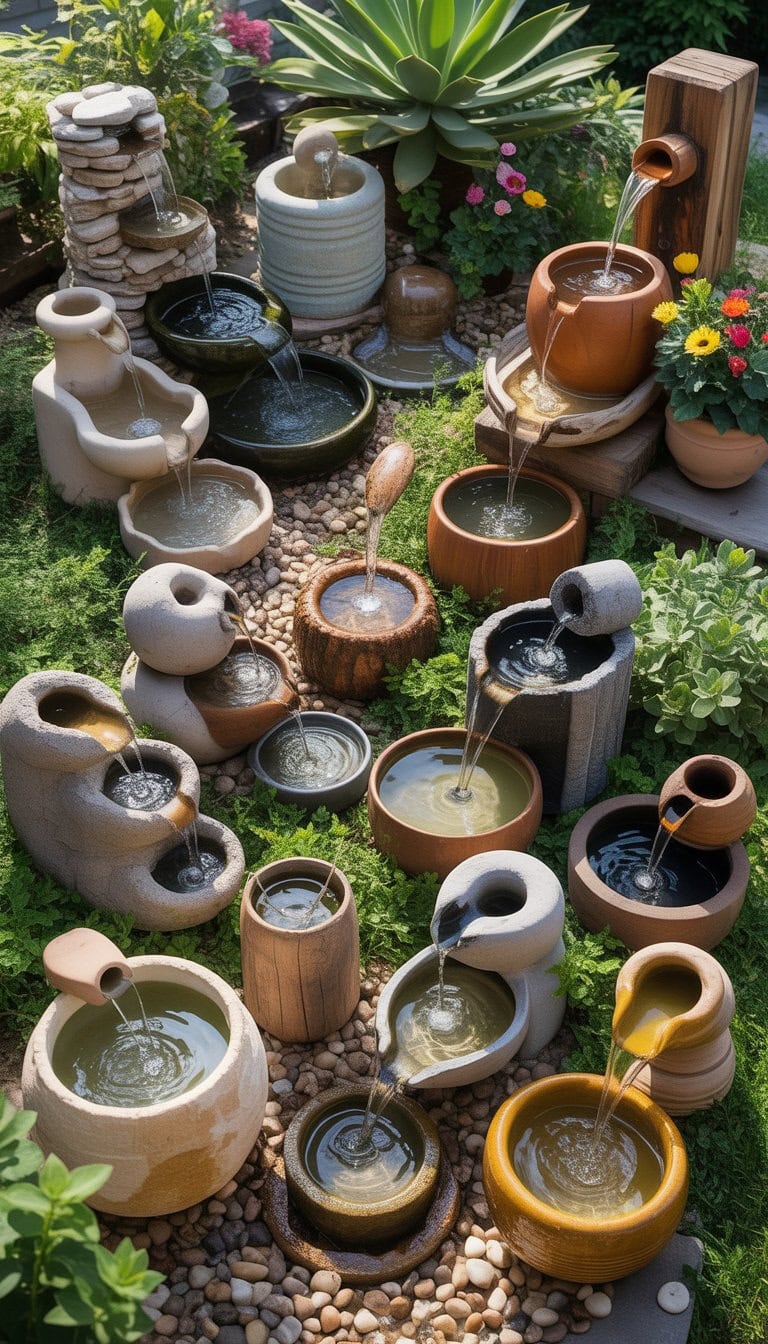
Small fountains or bowl features are much easier to keep clear since there’s less surface area for things to collect. I find that a weekly check goes a long way toward keeping everything fresh. For more ways to make backyard water features low-maintenance, check out these helpful tips for easy care.
Winterizing Small Waterfalls
When winter comes, I prepare my water feature so it won’t get damaged by freezing. First, I unplug my pump when temperatures drop. I remove the pump, rinse it, and store it indoors so ice doesn’t crack the motor.
If my feature is small, like a ceramic pot or bowl, I drain all the water and cover it with a tarp or plastic bin lid. For garden ponds, I make sure there’s a gap in any ice for air by floating a small ball or a pond de-icer. This helps keep fish and plants safe.
I never use salt or antifreeze in my pond. Instead, I clean out fallen leaves before the frost hits. That way, rotting debris won’t make the water dirty come spring. Taking these steps has saved me from a lot of repair work and kept my setup ready for the next season. If you want more ideas for winter protection, find inspiration in these ideas for water features.
Creative Personalization Ideas
When I design a small garden waterfall, adding special touches helps it stand out. Picking the right lights and plants gives the space extra energy and style.
Incorporating Lighting for Ambience
I love using lighting to highlight my garden waterfall after dark. Small LED spotlights can be tucked behind rocks or under the water flow. This makes the water sparkle and draws attention to the waterfall’s shape at night.
For a softer look, I might string fairy lights in surrounding bushes or trees. Submersible lights are another fun option. These shine through the water and make the whole feature glow in the evening.
Different colors set different moods. Soft white or amber lights feel warm and calm. Blue or green lights give a cool, modern look. I always check that the lights I choose are waterproof and safe for outdoor use. Timer switches are handy, so lights turn on automatically each night.
Here’s a quick list I follow for waterfall lighting:
LED spotlights for focused accents
Fairy lights for a magical touch
Submersible lights for glowing water
Color options to match mood or occasion
Choosing Complementary Plantings
Pairing the right plants with my waterfall makes the whole area come alive. I like to choose plants that enjoy moisture, like ferns or hostas. These look natural next to moving water and stay healthy in the damp air.
If my waterfall is surrounded by rocks, I tuck in small succulents or creeping ground covers. This keeps things tidy but lush. For a more colorful look, I add blooming flowers such as astilbe, iris, or lobelia. Native plants are a smart choice because they adapt well and need less care.
In sunny spots, ornamental grasses sway in the breeze. Shade-loving plants work best if the waterfall is under trees. When I plan, I think about all the seasons so there’s always something interesting to see. For more inspiration, I check out small garden waterfall ideas to see how others mix plants with their water features.
Frequently Asked Questions
Bringing a small garden waterfall to life means learning about smart material choices, creative layouts, eco-friendly water use, and the daily realities of care. As someone who loves building these features, I know each detail can affect how well the waterfall blends into a garden and fits your routine.
What materials are essential for crafting an enchanting mini garden cascade?
I usually gather rough stones and arrange them in a staircase shape to give a natural flow to my waterfall. A durable pond liner, a strong submersible pump, and flexible tubing are a must for directing water smoothly. I like to use native plants, gravel, and pebbles around the edges to soften the look and help the cascade blend into my garden.
Can you enlighten me on the upkeep of a petite garden waterfall?
To keep my small waterfall clean and clear, I check the pump weekly for debris and rinse the filter when needed. I top off the water every few days, especially during hot weather. For less maintenance, I often suggest a pondless waterfall, which lets the water cycle through a hidden reservoir and reduces algae problems.
Share some secrets on how to seamlessly integrate a waterfall into my tiny garden landscape?
I place my waterfall near gravel pathways so it becomes a natural focal point. Choosing native plants like water hawthorn helps the feature blend with my other landscaping. In small yards, I look for unused corners—nestling a waterfall there can transform even a cramped space into a relaxing retreat.
What innovative designs are there for waterfalls in confined outdoor spaces?
In tight spaces, a pondless waterfall is a smart choice because it saves space and cuts down on upkeep. Vertical water walls and stacked stone columns also work well without taking up much room. Sometimes, a tiny koi pond with a gentle cascade gives both movement and life to the area.
Could you suggest eco-friendly ways to maintain water circulation in small waterfalls?
I use energy-efficient pumps whenever I can and set them on timers to run only when needed. Adding oxygenating plants around the feature helps keep water fresh without chemicals. Sometimes a solar-powered pump is enough for mini waterfalls, making the whole project greener.
What are the pros and cons of adding fish to my garden waterfall ecosystem?
Having fish, like koi or goldfish, adds beauty and movement. Fish can even help control insects and algae. On the flip side, I have to clean the water more often and monitor water quality closely—especially in small ponds where conditions can change fast. Fish also need a safe, shaded area and protection from pets or birds.